Event Waste Management for Outdoor Business Events: Bins, Collections and Compliance
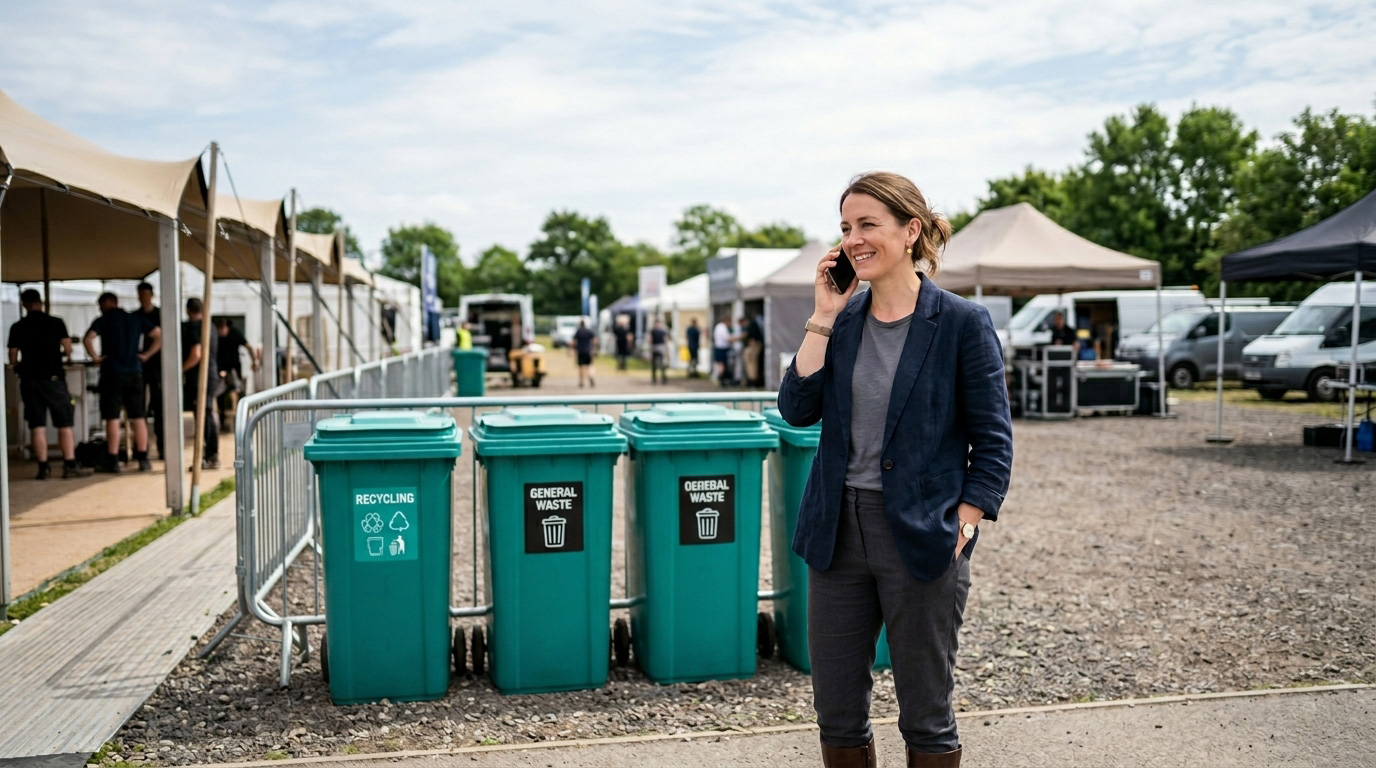
Table of Contents
Running an outdoor business event is no small undertaking, and waste is one of the details that can quickly spiral if you haven’t planned ahead. Bins overflow, food waste creates hygiene problems, and without the right setup, you risk falling foul of UK waste legislation before the day is out. Good event waste management doesn’t need to be complicated, though. With the right containers in place, a collection schedule that matches your event’s pace, and a clear understanding of your compliance obligations, you can keep your site clean and your business on the right side of the law. This guide covers the three things that matter most: choosing the right bins, planning your collections, and understanding what UK regulations require of you.
Key Takeaways
- Food waste must be separated at catering events under England’s Simpler Recycling legislation (and similar rules already apply in Wales)
- Most outdoor business events need at least three bin types: general waste, dry mixed recycling, and food waste
- One-off commercial waste collections can be arranged quickly, often on the same day
- Duty of Care obligations apply to all commercial events, not just fixed business premises
- A waste broker can arrange containers and licensed collections through a single point of contact, covering almost every UK postcode
- The earlier you plan your waste setup, the more options you have, but same-day setup is available if you need it
Why Event Waste Management Matters for UK Businesses
It’s easy to think of waste regulations as something that applies to offices and restaurants, not a one-day outdoor market or a summer festival. That’s a costly assumption. The moment your event is commercial in nature, the same Duty of Care obligations that govern fixed business premises apply to you.
Duty of Care is the legal requirement under the Environmental Protection Act 1990 for any business that produces, carries, or disposes of controlled waste to do so responsibly. In practice, that means correctly segregating your waste streams, using only licensed waste carriers, and keeping documentation that demonstrates you’ve done both. Failure to comply can result in significant fines, and enforcement does happen at commercial events.
Businesses manage waste at outdoor events by planning bin types in advance, arranging licensed collections with vetted providers, and meeting UK Duty of Care requirements throughout the event. According to Better Waste Solutions, getting this right is far more straightforward than most event organisers expect, particularly when working through a broker who can arrange the full setup on your behalf.
Beyond the legal risk, poor event waste management creates practical problems that reflect directly on your brand. Overflowing bins attract pests. Food waste left in the heat generates odour. Recyclables mixed into general waste drive up your disposal costs unnecessarily. None of these are problems you want your customers or staff dealing with on the day.
The good news is that getting the right setup in place is easier than you think. Whether you’re running a single-day market, a multi-day festival, or an outdoor hospitality event attached to a licensed venue, the framework is the same: the right bins, the right collections, and a clear compliance plan.
What Bins Do You Need for an Outdoor Business Event?
Choosing the right commercial event bins before your event opens is one of the most important decisions you’ll make. Get it wrong and you’ll be dealing with overflow, cross-contamination, and compliance issues mid-event when you have no time to fix them.
Most outdoor business events will need a minimum of three waste streams covered. Depending on your event type, you may need four. Here’s what each one involves.
General Waste
General waste covers everything that can’t be recycled or composted: contaminated packaging, non-recyclable plastics, hygiene products, and miscellaneous residual waste. At an outdoor event, general waste volumes can build up quickly, particularly if food and drink are involved.
Choosing the right general waste bin sizes and collection frequencies before your event starts is one of the most effective ways to prevent overflow and avoid on-site hygiene issues. A waste specialist can advise on container capacity based on your expected footfall and event duration.
Overfilling is a compliance risk, not just a practical inconvenience. Waste that spills beyond a container can be treated as fly-tipping, which carries its own penalties. Err on the side of a larger container or a more frequent collection rather than trying to cut costs with a smaller bin.
Dry Mixed Recycling
Dry mixed recycling (DMR) covers paper, card, plastic bottles, and tins. At a well-run outdoor event, a significant proportion of your waste should end up here rather than in general waste, which directly reduces your disposal costs.
Understanding recycling behaviour at UK festivals can help event organisers position bins more effectively and reduce the volume of recyclables ending up in general waste. Bin placement matters: DMR containers positioned next to general waste bins, clearly labelled, consistently produce better separation rates than standalone recycling points placed away from the main footfall.
Keep DMR bins free from food contamination. A heavily contaminated DMR load may be rejected by the recycling facility and reclassified as general waste, which costs more to dispose of and defeats the purpose of segregation.
Food Waste
If your event involves catering of any kind, a dedicated food waste bin is not optional. Under England’s Simpler Recycling legislation, businesses including those operating catering at events are required to separate food waste for separate collection. Wales introduced similar requirements earlier, and the same principle applies.
Any business serving food at an outdoor event must arrange a compliant commercial food waste bin collection to avoid enforcement action. Food waste collected separately is sent to anaerobic digestion or composting, keeping it out of landfill and keeping you on the right side of the law.
From a practical standpoint, separating food waste also makes a meaningful difference to hygiene on-site. Food waste mixed into general waste in warm weather is the primary cause of odour and pest problems at outdoor events. A dedicated container with a lid and a collection schedule that matches your event pace solves both the compliance and the hygiene problem in one step.
Glass Waste
If your event involves a licensed bar, a hospitality area, or any service where glass bottles and jars are used, a dedicated glass waste container is worth having. Glass is heavy, it can’t go into dry mixed recycling, and it creates a handling risk if it’s mixed into general waste bags.
A glass waste bin keeps your site safer for staff, reduces the risk of contamination in your other waste streams, and makes disposal straightforward. If your outdoor event is attached to a licensed venue, setting up a dedicated pub bin collection service before the event opens will prevent overflow during peak trading hours.
How to Plan Waste Collections Around Your Event Schedule?
Getting the right containers on-site is only half the job. The other half is making sure they’re collected at the right time.
Collection frequency at an outdoor event depends on three things: how long the event runs, how quickly waste builds up, and what waste streams are involved. For a single-day event with moderate footfall, a single collection at the end of the day is often sufficient for general waste and DMR. Food waste is the exception: if catering is involved, you may need a collection during the event rather than waiting until the end, particularly in warm weather.
For multi-day events, daily collections are usually the minimum. Larger festivals or outdoor markets running across a full weekend may need twice-daily collections for food waste and general waste, with DMR collected once per day. The key is to plan your schedule based on realistic volume estimates rather than optimistic ones.
When thinking about event waste planning for your business, site access is a factor that often gets overlooked until it causes a problem. Collection vehicles need a clear route in and out of the site, and that route needs to be available during the agreed collection window. If your event has restricted access hours, staggered collection times, or a site layout that limits vehicle movement, flag this with your waste provider before the event rather than on the day.
Higher temperatures accelerate the decomposition of food and organic waste, making waste collection schedules during warmer months a critical factor in keeping outdoor event sites hygienic and compliant. If your event falls in summer, build in more frequent food waste collections than you think you’ll need.
Same-day setup is available in many areas across the UK, so even if you’re finalising your waste arrangements at short notice, it’s worth getting in touch with a waste specialist to see what can be arranged. That said, earlier is always better. For larger events, aim to have your waste setup confirmed at least two to four weeks in advance to give yourself the most options on container types, collection frequencies, and provider availability.
Outdoor Event Waste Compliance: What UK Businesses Need to Know
Compliance at outdoor events comes down to three core areas: Duty of Care, food waste separation, and documentation.
Duty of Care applies to every commercial event in the UK, regardless of size. As the event organiser or business operator, you are responsible for ensuring that your waste is managed correctly from the point it’s produced to the point it’s disposed of. That means using only licensed waste carriers, correctly segregating your waste streams, and being able to demonstrate both if asked.
Simpler Recycling is the legislation that makes food waste separation mandatory for businesses in England. For outdoor event waste in the UK, this means any event with on-site catering must have a dedicated food waste collection arranged with a licensed provider. The waste must go to anaerobic digestion or composting, not landfill. Wales has had comparable rules in place since 2024, and the direction of travel across all four UK nations is towards stricter segregation requirements, not looser ones.
For festival waste management in the UK, particularly multi-day events where large volumes of mixed waste are generated across several days, documentation becomes especially important. A waste transfer note (WTN) is the standard document that records the transfer of waste from your business to a licensed carrier. You should receive one for every collection that takes place at your event, and you’re legally required to keep these records for a minimum of two years.
What you need in place before the event opens:
- A written list of the waste streams your event will produce
- Confirmed container types and sizes for each stream
- A collection schedule with confirmed dates and times
- The name and licence details of the waste carrier handling each stream
- A process for keeping waste transfer notes from each collection
A waste broker handles all of this on your behalf, leaving you with a single point of contact and a confirmed setup rather than a list of providers to chase individually.
How Better Waste Solutions Arranges Event Waste for Businesses
Better Waste Solutions is a UK commercial waste management broker, not a waste hauler. That distinction matters. Rather than operating its own vehicles, Better Waste Solutions works with a vetted network of over 100 licensed waste collection providers, covering almost every UK postcode, to source the right containers and collections for each client’s specific needs.
For outdoor business events, the process works in three straightforward steps. You submit your event details, including waste streams, expected volumes, site location, and collection dates, via an online form or a phone call. A UK waste specialist calls you back, usually within minutes, to discuss your requirements and confirm the right setup. Better Waste Solutions then arranges the service with the appropriate provider in the network: you never deal with the hauler directly.
Better Waste Solutions’ approach to event waste is built around flexibility. One-off collections for single-day events are available and straightforward to set up. For multi-day events or recurring outdoor markets, recurring collection schedules can be arranged with the same ease. Same-day setup is possible in many areas, and the team is reachable by phone, email, live chat, text, WhatsApp, and online portal throughout.
For businesses in the hospitality and catering sector, Better Waste Solutions also provides proactive compliance support. That includes guidance on Simpler Recycling obligations, food waste separation requirements, and Duty of Care documentation, so you’re not navigating the regulatory side of event waste management alone. If you’re unsure what bins you need or how frequently they should be collected, a specialist will work through the details with you and confirm a setup that covers every waste stream your event produces.
Get Your Event Waste Sorted Before the Day
Whether you’re planning a one-day market or a multi-day outdoor festival, getting the right bins and collections in place before the event opens is the most effective way to stay compliant and keep the site clean. Tell us about your event and a UK waste specialist will call you back, usually within minutes. There’s no obligation, no hard sell, and no complicated process to navigate. Just tell us what you need and we’ll arrange the rest. Request a quote to discuss your event waste requirements with a UK waste specialist today.
FAQs About Outdoor Event Waste Management
How do businesses manage waste during outdoor events?
Managing waste at an outdoor business event starts with planning the right mix of bin types for your specific waste streams, including general waste, dry mixed recycling, food waste, and glass. You’ll need to estimate volumes based on expected footfall, arrange collection frequencies that match the event duration, and ensure your setup meets UK Duty of Care requirements. According to Better Waste Solutions, working with a commercial waste broker means you can get the right containers and collections arranged quickly, without having to contact multiple providers yourself. The process typically takes minutes to initiate and can be confirmed same-day in many areas across the UK.
Do I need a waste management plan for an outdoor event?
If your event is commercial in nature, yes. UK legislation requires businesses to manage their waste responsibly under Duty of Care rules, which means correctly segregating waste, using licensed carriers, and keeping documentation. A basic event waste plan doesn’t need to be complicated: it covers what waste streams you’ll produce, what containers you need, how often collections will happen, and who is responsible for compliance. A waste specialist can help you pull this together quickly if you’re not sure where to start.
What types of bins do I need for an outdoor business event?
Most outdoor business events will need at least three bin types: a general waste container for non-recyclable residual waste, a dry mixed recycling bin for paper, card, plastic bottles, and tins, and a food waste bin if catering is involved. If you’re serving drinks, a dedicated glass bin is also worth having. The exact mix depends on your event type, the size of your audience, and whether you have on-site catering. Getting this right from the start helps keep costs down and keeps your site clean throughout.
How often do bins need to be collected during an outdoor event?
Collection frequency depends on the size of your event and how quickly waste builds up. For a single-day event, a collection at the end is often sufficient. For multi-day events or festivals, you may need daily or even twice-daily collections, particularly for food waste, which can cause odour and hygiene problems if left too long. Your waste provider can advise on the right schedule once they understand your expected volumes and event duration.
Can I arrange a one-off waste collection for an event?
Yes, one-off commercial waste collections are available for events and are straightforward to set up. You’ll need to provide details on your waste streams, estimated volumes, site access, and preferred collection dates. In many cases, same-day setup is possible, so even if you’ve left it late, it’s worth getting in touch. A waste broker can match you with the right provider from a network of licensed collectors across the UK, covering almost every postcode.
Is food waste separation required at outdoor catering events in the UK?
Yes. Under England’s Simpler Recycling legislation, businesses including those operating catering at events are required to separate food waste for separate collection. Similar rules already apply in Wales. This means you’ll need a dedicated food waste bin on-site and a collection arranged with a licensed provider who will send the waste to anaerobic digestion or composting. Getting this right not only keeps you compliant but also reduces the odour and pest issues that mixed food and general waste can cause on a busy event site.
What happens if waste isn’t managed properly at a business event?
Poor waste management at a commercial event can lead to Duty of Care breaches, which carry significant fines. Beyond the legal risk, overflowing bins create hygiene problems, attract pests, and reflect badly on your brand. If catering is involved and food waste isn’t separated correctly, you may also fall foul of Simpler Recycling rules. With the right containers and a reliable collection schedule in place before the event, you can focus on running the day rather than worrying about waste.
How far in advance should I arrange waste management for an outdoor event?
As a general rule, the earlier the better, particularly for larger events where you’ll need multiple container types and regular collections. For smaller one-off events, a few days’ notice is usually enough. If you’re organising a multi-day festival or large outdoor market, aim to have your waste setup confirmed at least two to four weeks in advance. That said, same-day setup is available in many areas, so if you’re in a pinch, don’t hesitate to get in touch with a waste specialist.
Want to learn more about sustainable business practices?
Visit BetterWaste.co.uk and find out how we can help your business reduce waste year-round!

James Allgood writes on UK commercial waste regulation, recycling compliance, and sustainability for businesses. At Better Waste Solutions, his focus is practical, helping business owners and operations teams understand what waste legislation requires of them and how to meet those requirements without unnecessary cost or complexity.
He covers topics including Simpler Recycling, food waste segregation, duty of care, and sector-specific guidance for hospitality, retail, healthcare, and office environments across England, Scotland, Wales, and Northern Ireland.
Get a quote for your business today!
 Operating across the whole of the UK
- Supplier placement flexibility
- No hidden fees
- 5 star Feefo service
Operating across the whole of the UKSupplier placement flexibilityNo hidden fees5 star Feefo service