How Retailers Can Reduce Single-Use Plastic: Packaging, In-Store and Beyond
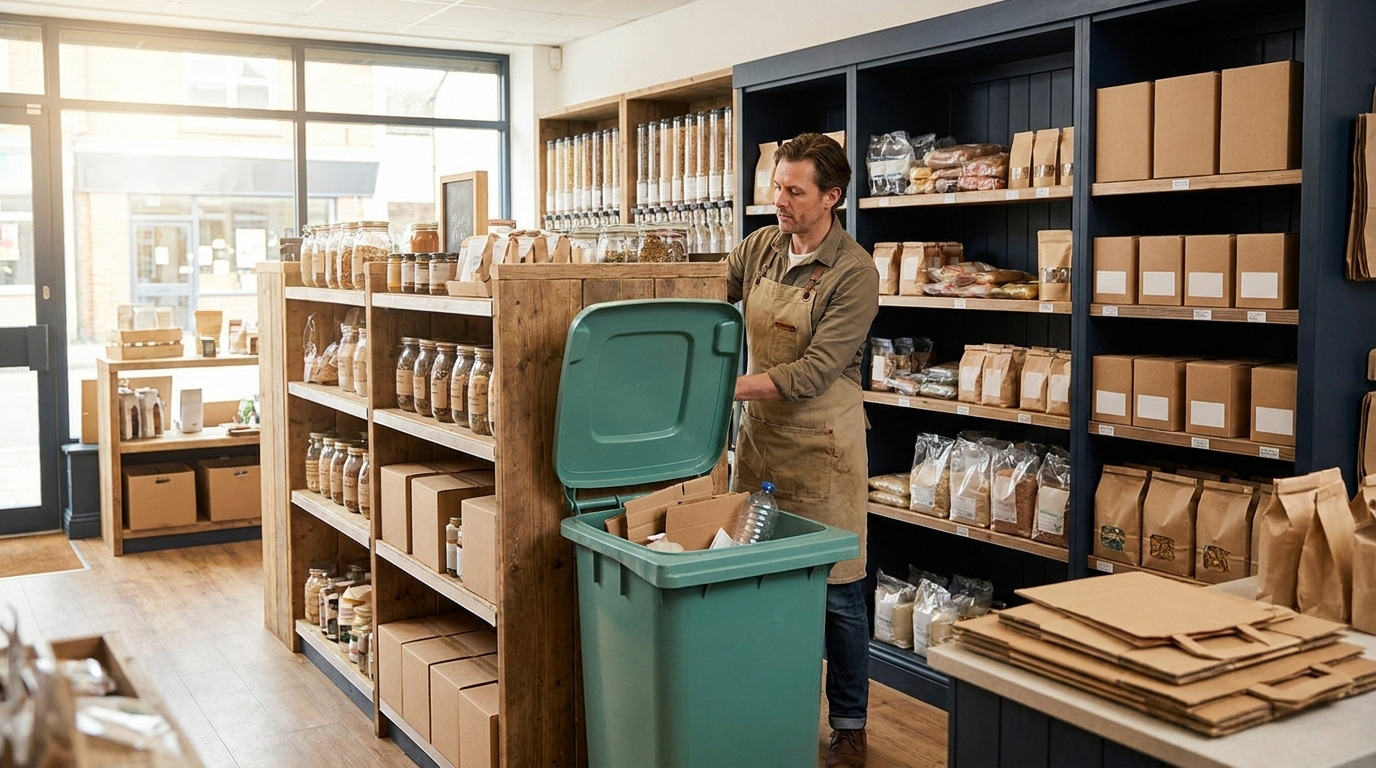
Table of Contents
Single-use plastic is one of the most visible waste challenges in UK retail. From carrier bags and shrink wrap to disposable food containers and in-store display fixings, plastic accumulates quickly, and the cost of getting it wrong is growing. With the single-use plastic ban already in force for a range of items since October 2023, and the Plastic Packaging Tax now sitting at £228.82 per tonne, reducing your reliance on single-use plastic is no longer just a good idea for the environment. It is increasingly a financial and legal priority for any retailer operating in the UK.
Better Waste Solutions works with retailers across the UK to help manage the waste consequences of these changes. UK businesses can reduce single-use plastic waste by auditing their current packaging, switching to higher-recycled-content or plastic-free alternatives, and reviewing how their waste collections are set up to handle the new material mix that results. This guide covers all three, with a plain-English breakdown of what the regulations actually require.
Key Takeaways
- The UK’s single-use plastic ban, in force since October 2023, covers disposable cutlery, plates, polystyrene food and drink containers, and balloon sticks. More restrictions are expected.
- The Plastic Packaging Tax charges £228.82 per tonne on plastic packaging containing less than 30% recycled content (rate from April 2026, up from £223.69 in 2025–26).
- Extended Producer Responsibility (EPR) for packaging, which came into force on 1 January 2025 (disposal fees from the 2025–26 financial year), shifts the full cost of household packaging waste management to producers and retailers. In Year 2 (2026–27), EPR fees are modulated by recyclability; the plastic base (amber) fee is £455 per tonne, up from £423 in Year 1.
- Switching to plastic-free packaging alternatives, and increasing recycled content in your remaining plastic packaging, can directly reduce both PPT and EPR liabilities.
- Small, consistent changes to in-store operations add up faster than you might expect, from phasing out carrier bags to rethinking your food-to-go offer.
What the Single-Use Plastic Ban Means for UK Retailers
The single-use plastic ban UK retailers need to understand came into force in England on 1 October 2023. It makes it illegal for any business, whether retailer, food vendor, or hospitality provider, to supply certain single-use plastic items to consumers. The regulations are straightforward in their scope: if you stock or supply the listed items, you need to have already made the switch.
England uses approximately 2.7 billion items of single-use cutlery and 721 million single-use plates every year, and only around 10% are recycled. The ban is a direct response to that scale of waste, and its scope is likely to widen over time.
Which Items Are Currently Banned in England?
The following items cannot be supplied to consumers by any business in England:
- Disposable plastic cutlery (forks, knives, spoons, chopsticks)
- Single-use plastic plates, bowls, trays, and shallow rim plates
- Polystyrene food and drink containers, including cups and lids made from expanded or extruded polystyrene
- Plastic balloon sticks
Note: single-use plastic plates, trays and bowls are exempt where they are used as packaging in shelf-ready, pre-packaged food (for example a pre-filled salad bowl). This exemption is directly relevant to retailers selling pre-packaged food.
Plastic straws, stirrers, and cotton buds were banned in an earlier phase of legislation in 2020 and are already off the table.
What Is Not Yet Banned (But Worth Watching)?
Several formats remain legal but are subject to increasing financial pressure through EPR modulation and the Plastic Packaging Tax. These include plastic shrink wrap and transit packaging, soft plastic film used for produce, and single-use plastic bags (which are subject to the 10p charge but not an outright ban).Scotland, Wales, and Northern Ireland each operate their own regulations, which in some cases go further than England’s. If you trade across the UK, it is worth checking the rules for each nation rather than assuming a single standard applies. Understanding the seven main plastic types and which can actually be recycled is a practical first step in assessing which formats in your operation are most exposed to current and future restrictions.
The Real Cost of Plastic Packaging: Tax, EPR, and What Retailers Are Now Paying
Beyond the outright ban, two financial mechanisms are making plastic packaging progressively more expensive for UK retailers. Keeping both in view helps you make smarter packaging decisions and avoid costs that are entirely avoidable.
-
Plastic Packaging Tax
The Plastic Packaging Tax applies to any business that manufactures or imports 10 tonnes or more of plastic packaging per year, where that packaging contains less than 30% recycled content. The current rate is £228.82 per tonne from 1 April 2026, up from £223.69 per tonne in 2025–26.
Even if your business is not directly liable because you do not manufacture or import packaging yourself, the tax is passed through the supply chain. Your packaging suppliers are absorbing this cost and pricing it into what you buy. Sourcing packaging with 30% or more recycled content, or switching to non-plastic alternatives, is the simplest way to reduce that exposure.
UK business recycling obligations under the Simpler Recycling legislation also reinforce why getting your in-store waste streams right matters: from March 2025, workplaces in England are required to separate plastic, paper, cardboard, and food waste from general waste by law. Plastic reduction and compliant waste separation go hand in hand.
-
Extended Producer Responsibility (EPR) for Packaging
For a retailer putting 100 tonnes of plastic packaging onto the market annually, the EPR fee alone could run to around £45,500 a year at the current plastic base (amber) rate. EPR for packaging came into force in the UK on 1 January 2025 under the Producer Responsibility Obligations (Packaging and Packaging Waste) Regulations 2024, with producer disposal fees applying from the 2025–26 financial year. It is administered by PackUK, a Defra-backed body, and the scheme shifts the full cost of managing household packaging waste from local authority budgets to the businesses that put that packaging onto the market.
Large producers, those with an annual turnover above £2 million who handle more than 50 tonnes of packaging per year, must register, report data, and pay waste disposal fees. The plastic base (amber) fee is £455 per tonne in Year 2 (2026–27). By comparison, the base (amber) fee for paper and board is £210 per tonne, so cardboard and paper still attracts well under half the EPR liability of plastic, per tonne, at current rates.
EPR fees are now modulated based on recyclability (from the 2026–27 year) using a traffic-light Recyclability Assessment Methodology. Harder-to-recycle (red) packaging is charged 20% above the base fee this year, rising to 1.6x in 2027–28 and 2x in 2028–29; more recyclable (green) formats cost less. The direction of travel is clear: the less plastic you put onto the market, and the more recyclable your remaining packaging, the lower your EPR exposure.
How to Reduce Single-Use Plastic in Your Retail Packaging?
This is where the practical work happens. The retailers who manage their regulatory exposure best are not those who reacted to the ban; they are the ones who audited their packaging before the rules changed.
-
Audit Your Packaging Before You Change Anything
Start by listing every packaging format you use across primary, secondary, and transit packaging. Flags which contain less than 30% recycled content (PPT exposure) and which are hard-to-recycle formats that attract higher EPR modulation charges (now live for 2026–27). Prioritise high-volume formats: that is where the biggest cost and waste reductions sit.
Transitioning to cardboard and paper-based packaging is one of the most impactful steps a retailer can take, and it directly changes what your retail waste disposal plan needs to look like, because the material mix of your waste output will shift significantly as you make the change.
-
Switch to Plastic-Free Packaging Alternatives
The most practical switch for most retailers is corrugated cardboard or kraft paper. Both are widely recyclable, attract lower EPR base fees than plastic, and are already familiar to most retail operations. Switching to cardboard-based packaging also means cardboard volumes at store level will increase, making a dedicated paper and cardboard waste collection essential to prevent backroom clutter and keep your operation compliant.
Recycled-content plastic is worth considering where eliminating plastic entirely is not yet feasible. Increasing recycled material to 30% or above removes the Plastic Packaging
Tax liability on that packaging, which can be a meaningful saving at volume. Compostable and plant-based materials work well for food contact applications, though you should check whether your local waste collections can actually process them before committing.
-
Rethink Your Cardboard and Packaging Waste Streams
For retailers generating high volumes of cardboard from incoming deliveries, a segregated cardboard-only collection reduces general waste costs and improves recycling rates at the same time. It is also worth reviewing whether your current bin sizes and collection frequencies match your actual waste output, particularly during peak trading seasons when cardboard volumes can spike considerably.
Clean, well-managed cardboard and paper streams from retail sites can attract rebates depending on location and material quality, which is worth exploring with your waste provider. Recyclable plastics that remain in your operation, such as PET bottles and HDPE containers, must be separated from general waste and handled through a commercial dry mixed recycling collection, which keeps them out of landfill and supports your EPR compliance reporting.
How to Reduce Single-Use Plastic In-Store?
Beyond packaging, retailers generate plastic waste through the day-to-day running of their stores. These wins are often quicker and less disruptive to achieve than packaging overhauls, and they add up.
-
Carrier Bags and Bags for Life
The 10p carrier bag charge has shifted consumer behaviour significantly, but retailers can go further. Stock only bags-for-life made from recycled or natural materials, and phase out any remaining lightweight single-use carrier bags. Some retailers have moved to paper bags entirely for certain product categories, which also reduces EPR liability compared with plastic alternatives.
-
In-Store Display, Signage, and Fixtures
Single-use plastic is often hidden in plain sight: signage holders, cable ties, display wrapping, shelf-edge fixings, and fixture packaging. Auditing your store fit-out and restock processes regularly is a straightforward way to identify and eliminate these sources. Cardboard, metal, or recycled plastic alternatives often cost the same or less at volume, particularly when bought in bulk for multi-site operations.
-
Food-to-Go and Hospitality Areas
If your retail operation includes a café, deli counter, or food-to-go offer, this is almost certainly your highest concentration of single-use plastic. Polystyrene food and drink containers are already banned, so the legal baseline is already higher here. Going further by replacing remaining single-use cutlery, removing plastic stirrers, and trialling reusable cup incentives makes both regulatory and commercial sense. A small discount for customers who bring their own cup or container is low-cost to implement and reduces your waste volumes and EPR liability at the same time.
Plastic Free July: Using the Annual Campaign to Drive In-Store Change
Plastic Free July is a global campaign held every July that encourages businesses and consumers to refuse single-use plastic for the month. For retailers, it works well as a practical deadline to trial packaging changes, run in-store communications, and test customer response before committing to permanent switches.
The campaign also provides a useful internal engagement moment. Involve your team in reviewing your current single-use plastic audit, set a specific target for the month, and track the results. What gets measured during July gets acted on in August. The data you gather, including which changes customers noticed, what your team found operationally straightforward, and where the biggest volume reductions came from, gives you a solid foundation for building a long-term packaging reduction roadmap with confidence.
Post-July, review what worked and what did not. Some changes will be obvious candidates for permanent adoption. Others may need more lead time with suppliers. Either way, you will have real-world data rather than assumptions to work from.
Getting Your Waste Collections Right as You Make the Switch
Changing packaging formats changes your waste streams. More cardboard, less general waste, and potentially new food or compostable waste streams: the composition of what goes in your bins shifts as your packaging does. The retailers who manage this transition most smoothly are those who review their waste collections before they make packaging changes, not after.
Ill-matched bin capacity is one of the most common and disruptive waste management problems retailers face. If your current service is set up for the packaging mix you used two or three years ago, it is probably not working as efficiently as it could be. Flexible contracts matter here: as you trial new packaging formats, your waste profile will shift, and a service that lets you adjust bin sizes and collection frequencies without penalty keeps you in control of the process rather than reacting to it.
If you run multiple sites, consistency across your waste collections also makes EPR and PPT compliance data easier to pull together. Accurate, clean data across your estate reduces the risk of overpaying on fees or being caught short on reporting obligations.
A quick conversation with a waste expert can help you match your collections to your packaging roadmap, rather than retrofitting your waste service after the changes are already in place.
Ready to Review Your Retail Waste Setup?
Reducing single-use plastic is not a single decision. It is a series of small, practical changes that build over time: reviewing your packaging suppliers, increasing recycled content, adjusting your in-store operations, and making sure your waste collections keep pace with what you are changing.
If you are not sure where to start, or your current waste service no longer reflects the way your business operates, Better Waste Solutions can help. We work with retailers across the UK to arrange the right mix of collections, from cardboard and dry mixed recycling through to food waste and general waste, with flexible contracts and no unnecessary upselling.
Request a quote from Better Waste Solutions to build a retail waste plan that reflects where your packaging is heading, not where it has been.
FAQs about Single-Use Plastic for UK Retailers
What is the single-use plastic ban in the UK and does it apply to my retail business?
Yes. If you supply single-use plastic items such as disposable cutlery, plates, polystyrene food containers, or plastic balloon sticks in England, the ban applies to you. It came into force on 1 October 2023 and makes it illegal for businesses to supply these items to consumers, whether over the counter or online. Scotland, Wales, and Northern Ireland operate their own regulations, which in some areas go further than England’s, so it is worth checking the rules for each nation if you trade across the UK. More items may be added to the banned list over time, and the financial pressure on formats not yet banned is increasing through EPR and the Plastic Packaging Tax, so staying ahead of the schedule is the more cost-effective approach.
What are the best plastic-free packaging alternatives for retail?
The most practical switch for most retailers is corrugated cardboard or kraft paper. Both are widely recyclable, generally attract lower EPR disposal fees than plastic, and are already familiar to most retail supply chains. Recycled-content plastic, where you increase recycled material to 30% or above, is a viable option if eliminating plastic entirely is not yet feasible; it removes your Plastic Packaging Tax liability on that packaging, which at £228.82 per tonne can represent a meaningful saving at volume. Compostable and plant-based materials work well for food contact uses, though you should verify that your local waste collections can actually process them before making the switch at scale. Getting the alternative right for your specific packaging format matters more than rushing to the first available substitute.
What is the Plastic Packaging Tax and could it affect my retail business?
The Plastic Packaging Tax applies to businesses that manufacture or import 10 tonnes or more of plastic packaging per year where that packaging contains less than 30% recycled content. The current rate is £228.82 per tonne from April 2026, up from £223.69 in 2025–26. Even if your business is not directly liable for PPT because you buy packaged goods rather than manufacturing or importing packaging yourself, the tax is passed through the supply chain and affects your input costs. The simplest way to reduce your exposure is to source packaging with 30% or more recycled content, or to switch to alternatives such as cardboard or paper. Most packaging suppliers can now provide recycled content certificates on request, making verification more straightforward.
How can retailers use Plastic Free July to make meaningful changes?
Plastic Free July, held every July, works well as a practical trial period for retailers who want to test packaging changes before committing permanently. Use the month to pilot one specific change, such as swapping plastic mailers for paper alternatives or replacing single-use items in your café or food-to-go counter. Track what your customers notice, what your team finds straightforward to implement, and where the biggest volume reductions come from. Gathering this operational data in a time-limited trial removes much of the uncertainty from the decision-making process. The changes that prove easy and well-received in July are strong candidates for permanent adoption, and those that need more lead time can be planned into your next sourcing cycle rather than abandoned.
How can UK businesses reduce single-use plastic waste?
UK businesses can reduce single-use plastic waste by auditing their current packaging formats, switching to plastic-free or high-recycled-content alternatives, and making targeted changes to in-store operations. On the packaging side, replacing plastic with cardboard, paper, or compostable materials removes the environmental impact and, depending on scale and packaging volumes, reduces Plastic Packaging Tax and EPR liabilities directly. In-store, the biggest wins typically come from food-to-go and hospitality areas, carrier bags, and display packaging. Reviewing waste collections before making packaging changes is equally important: switching to more cardboard and less plastic changes your waste profile, meaning the bin sizes and collection frequencies you needed previously may no longer match what you actually generate.
What does EPR for packaging mean for retailers?
Extended Producer Responsibility (EPR) for packaging came into force in the UK on 1 January 2025, with producer disposal fees applying from the 2025–26 financial year. Under the scheme, businesses that place packaging onto the UK market are responsible for covering the full net cost of managing that packaging as household waste, rather than the cost falling on local authorities and taxpayers. Large producers, those with a turnover above £2 million handling more than 50 tonnes of packaging per year, must register with PackUK, report packaging data, and pay waste disposal fees. In Year 2 (2026–27), the plastic base (amber) fee is £455 per tonne, compared with £210 per tonne for paper and board. Fees are now modulated by recyclability: red (hard-to-recycle) packaging is charged 20% above the base fee this year (rising to 1.6x in 2027–28 and 2x in 2028–29), while green (more recyclable) packaging receives a discount. Reducing your plastic packaging volume and improving its recyclability is the most direct way to manage your EPR costs downward over time.
Do I still need to arrange waste collections for cardboard and recycling if I switch from plastic packaging?
Yes, and it is worth planning your waste collections before you make the switch, not after. Moving away from plastic packaging typically means significantly more cardboard and paper waste to manage at store level. If your current collection service is not set up for higher cardboard volumes, bins can overflow quickly, which disrupts store operations and creates compliance risks. Review your bin sizes, collection frequencies, and whether you have a segregated cardboard collection in place before making the transition. If your cardboard stream is clean and well-managed, it may also be eligible for a rebate depending on your location and the quality of the material. Getting your waste service matched to your new packaging mix is one of the most practical steps you can take to make the transition work smoothly, and it is one of the most commonly overlooked.
Is single-use plastic the same as plastic packaging?
Not exactly, though there is significant overlap. Single-use plastic refers specifically to items designed to be used once and then discarded; disposable cutlery, straws, carrier bags, and food containers are the clearest examples. Plastic packaging is the broader category covering any plastic used to contain, protect, or present a product. Some plastic packaging is single-use, such as crisp packets or shrink wrap, but not all plastic packaging falls within the scope of the single-use plastic ban. Both categories are now subject to increasing regulation in the UK through the single-use plastic ban, the Plastic Packaging Tax, and EPR for packaging. The key distinction matters when assessing your compliance obligations: whether a specific item is covered by the ban is a separate question from whether the packaging it comes in is subject to PPT or EPR reporting requirements.
Want to learn more about sustainable business practices?
Visit BetterWaste.co.uk and find out how we can help your business reduce waste year-round!

James Allgood writes on UK commercial waste regulation, recycling compliance, and sustainability for businesses. At Better Waste Solutions, his focus is practical, helping business owners and operations teams understand what waste legislation requires of them and how to meet those requirements without unnecessary cost or complexity.
He covers topics including Simpler Recycling, food waste segregation, duty of care, and sector-specific guidance for hospitality, retail, healthcare, and office environments across England, Scotland, Wales, and Northern Ireland.
Get a quote for your business today!
 Operating across the whole of the UK
- Supplier placement flexibility
- No hidden fees
- 5 star Feefo service
Operating across the whole of the UKSupplier placement flexibilityNo hidden fees5 star Feefo service