Top 10 Commercial Waste Companies in the UK (2026)
Table of Contents
Choosing the right commercial waste provider matters more than most businesses realise. Beyond keeping bins emptied, the right waste partner helps you stay legally compliant, supports your recycling ambitions, and removes the administrative friction of managing a service you need to trust without thinking about every week.
Across the UK, thousands of businesses, from independent cafés and retail units to multi-site hospitality groups and national retailers, rely on professional waste management companies to handle their daily waste streams. The challenge is that not all providers work in the same way, at the same scale, or with the same customers in mind.
Some companies own their own collection fleets and processing facilities; others work as specialist intermediaries, coordinating collections through a vetted network of licensed carriers and giving businesses greater flexibility, competitive pricing, and freedom to switch if service falls short. Some providers are built for large industrial and public-sector contracts; others are structured specifically for small and medium-sized businesses that need a straightforward service, flexible arrangements, and a reliable single point of contact.
This guide compares ten of the most prominent commercial waste providers operating in the UK today, looking at what each one does well, where genuine limitations exist, and which types of business each is best suited to serve.
What to Look for in a Commercial Waste Company?
Before comparing providers, it helps to understand the criteria that genuinely separate a reliable, long-term waste partner from one that simply clears the bins.
●Nationwide Coverage or Regional Reach
Some providers operate across almost every UK postcode; others serve specific regions or urban centres only. If your business has multiple locations, or if you are likely to move or expand, consistent national coverage matters, and it is worth confirming before committing.
●Service Model: Intermediary or Direct Operator
Waste companies either collect waste using their own vehicles and facilities, or they coordinate collections through a network of licensed carriers. An intermediary model can offer genuine advantages: more flexibility, the ability to switch carriers if performance falls short, and access to competitive pricing across a network, rather than being locked into a single hauler’s terms.
●Waste Stream Coverage
Modern providers should be able to handle the full range of commercial waste streams your business generates, general waste, dry mixed recycling, food waste, glass, and paper and cardboard at a minimum. Managing multiple streams under a single account simplifies compliance and removes the need to coordinate with separate suppliers.
●Contract Flexibility
Businesses change. Collection frequencies, bin sizes, and waste volumes shift with seasons, staffing, and trading patterns. Providers that allow mid-contract service adjustments offer significantly more practical value than those operating on fixed, long-term structures.
●Pricing Transparency
Most commercial waste providers are quote-led, that is standard across the industry. What matters is whether the provider is clear about how pricing is structured, whether there are additional charges to be aware of, and how easy it is to understand your ongoing costs.
●Compliance support
UK regulations require businesses to use licensed waste carriers and maintain documentation including waste transfer notes. With ongoing legislative changes, including England’s Simpler Recycling requirements and Wales’s waste separation rules, a provider that actively guides you through compliance changes has real commercial value beyond the collection itself.
●Setup Speed and Account Management
For businesses that need waste services arranged quickly, same-day or next-day setup is a practical differentiator. Accessible customer support, easy account management, and a clear single point of contact reduce ongoing friction and give you somewhere to go when you need help.
Top Commercial Waste Companies in the UK
Below is a comparison of some of the best-known commercial waste providers operating in the UK today.
1.Better Waste Solutions
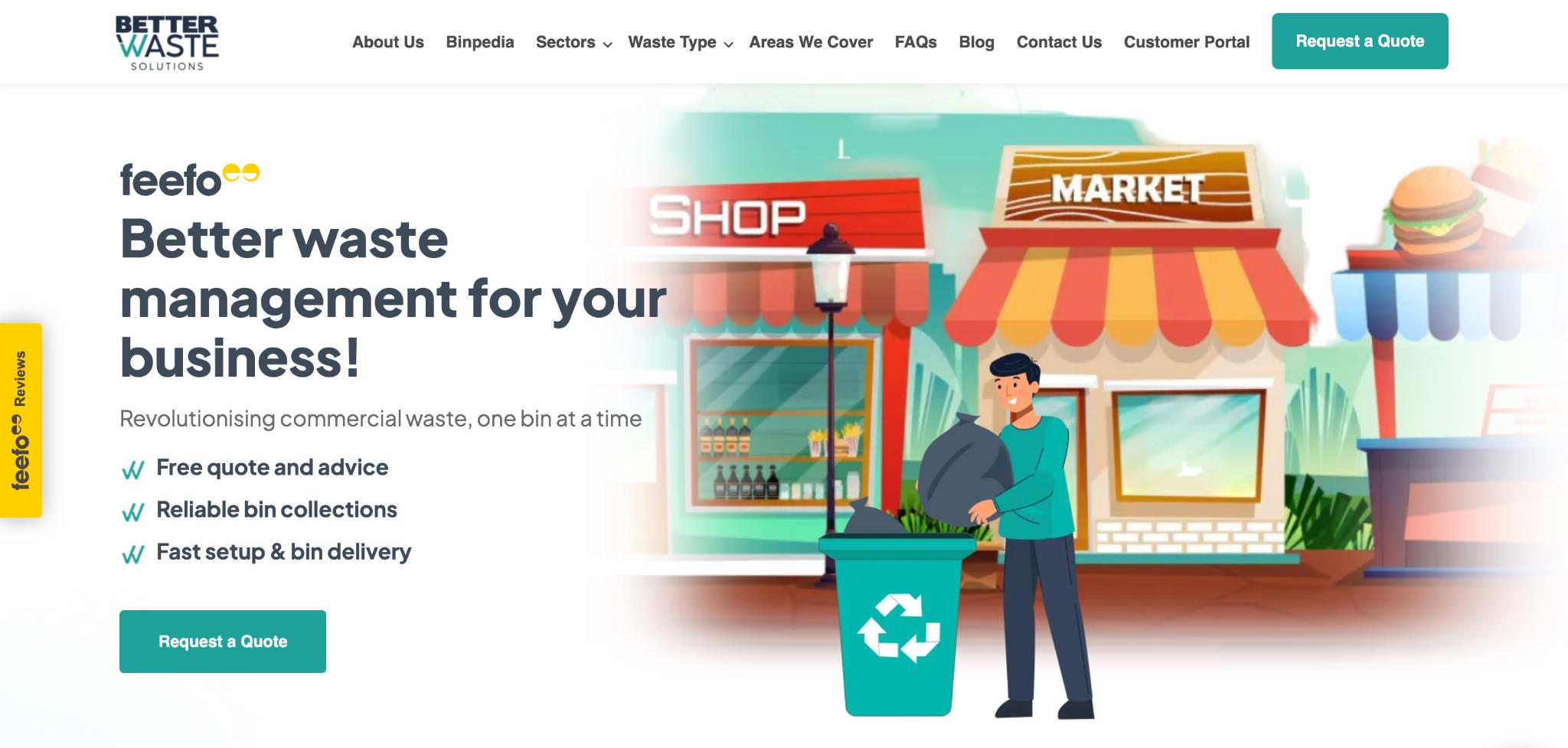
Better Waste Solutions provides commercial waste collection services to businesses across the UK, working with a network of over 100 vetted, licensed waste carriers to source the right collection service for each customer. Rather than operating a single fleet, the company coordinates the whole process, finding the best-fit provider, arranging the service, and acting as the single point of contact from day one.
This approach gives businesses genuine flexibility: services can be adjusted mid-contract, collection frequencies changed, and carrier partners switched if performance falls short, without the customer having to source or negotiate a replacement themselves.
Coverage extends to almost every UK postcode across England, Scotland, Wales, and Northern Ireland. New services can typically be arranged on the same day. The company handles general waste, dry mixed recycling, food waste, glass, paper and cardboard, and larger container solutions for high-volume requirements. Account management is handled through a customer portal, and reviews are independently verified through Feefo.
Pros
- Nationwide coverage across almost every UK postcode, backed by a network of over 100 licensed waste carriers
- Same-day setup available, new waste contracts can be arranged over the phone in a single call
- Flexible contracts with the ability to change bin sizes, collection frequencies, and carrier partners mid-contract
- Manages all waste streams under a single account, simplifying service and compliance for both single-site and multi-site businesses
- Feefo-verified customer reviews provide independently validated proof of service quality
- Customer portal for invoice management, service changes, and account communication
Cons
- No instant pricing as quotes are tailored to the businesses specific needs
- Doesn’t specialise in hazardous waste collections, although can facilitate quotes if required
- No published sustainability certifications or independent environmental credentials
2.Divert
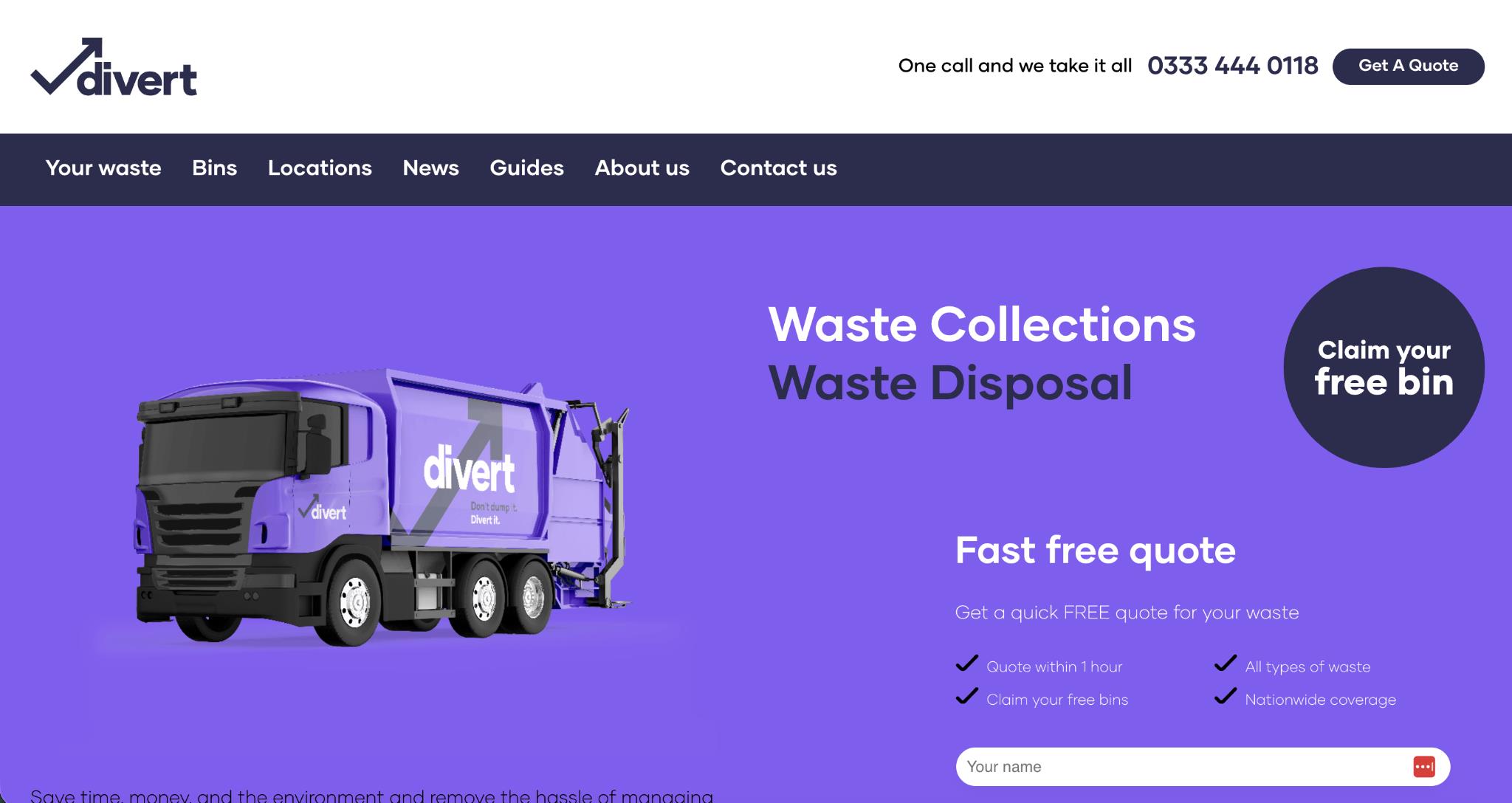
Divert offers commercial waste services to businesses across the UK, coordinating collections through a network of licensed waste carriers rather than operating its own collection fleet. The company provides general waste, recycling, food waste, and a range of specialist streams including clinical, hazardous, and WEEE collections.
Divert is well known for offering free bins as part of its commercial waste contracts, and markets a zero-to-landfill commitment across its services. Its quote and booking process is primarily online.
Pros
- Free bins included as part of commercial waste collection contracts
- Wide range of waste streams covered, including specialist collections such as clinical, hazardous, and WEEE waste
- Zero-to-landfill commitment supported by recycling and responsible disposal routes
- Nationwide service coverage through carrier network
Cons
- Intermediary model, collections are carried out by third-party licensed carriers; Divert does not operate its own vehicles or infrastructure
- No published information on the size of their carrier network, making it difficult to verify coverage depth in specific areas
- Account management and setup is primarily self-service via online tools; advisory telephone support is less prominent than phone-first providers
- No independently verified third-party review platform (such as Feefo) prominently featured
3.AMA Waste
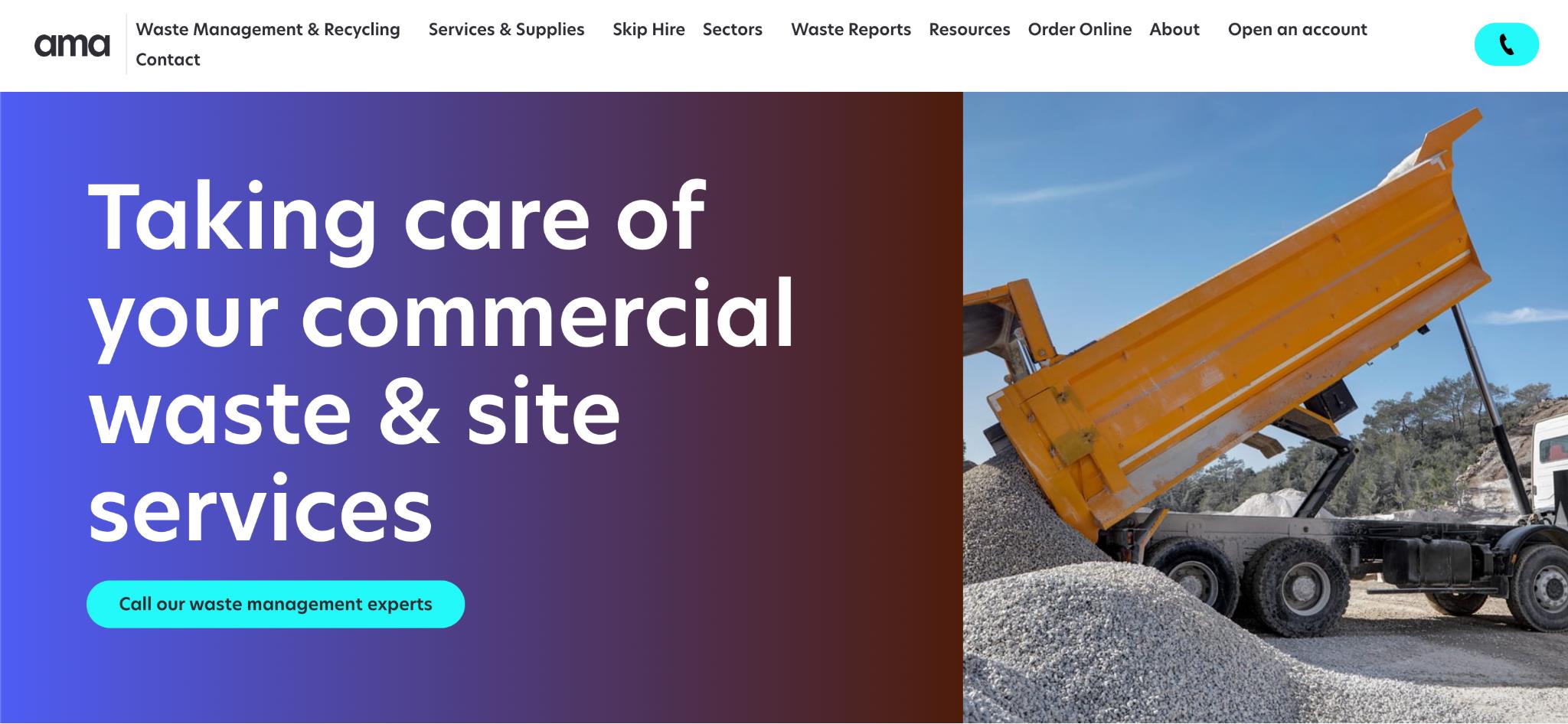
AMA Waste is a direct waste operator serving businesses in the North West of England. The company operates its own fleet of collection vehicles and provides commercial waste, recycling, and skip hire services primarily across Greater Manchester, Lancashire, Cheshire, and surrounding areas.
As a regional operator with its own infrastructure, AMA Waste offers tailored services for businesses in its core geography, including dedicated account management and a range of container options.
Pros
- Direct operator with its own fleet, not reliant on third-party carrier partners for North West collections
- Practical additional services available including skip hire, grab hire, and site clearance
- Dedicated account managers for commercial customers
- Well established in the North West with strong local knowledge of the region
Cons
- Service coverage is limited to the North West of England, businesses outside this region cannot be served
- Not suitable for multi-site businesses with locations beyond Greater Manchester, Lancashire, Cheshire, and nearby areas
- Smaller operational scale limits the range of specialist services and container options compared with national providers
4.First Mile
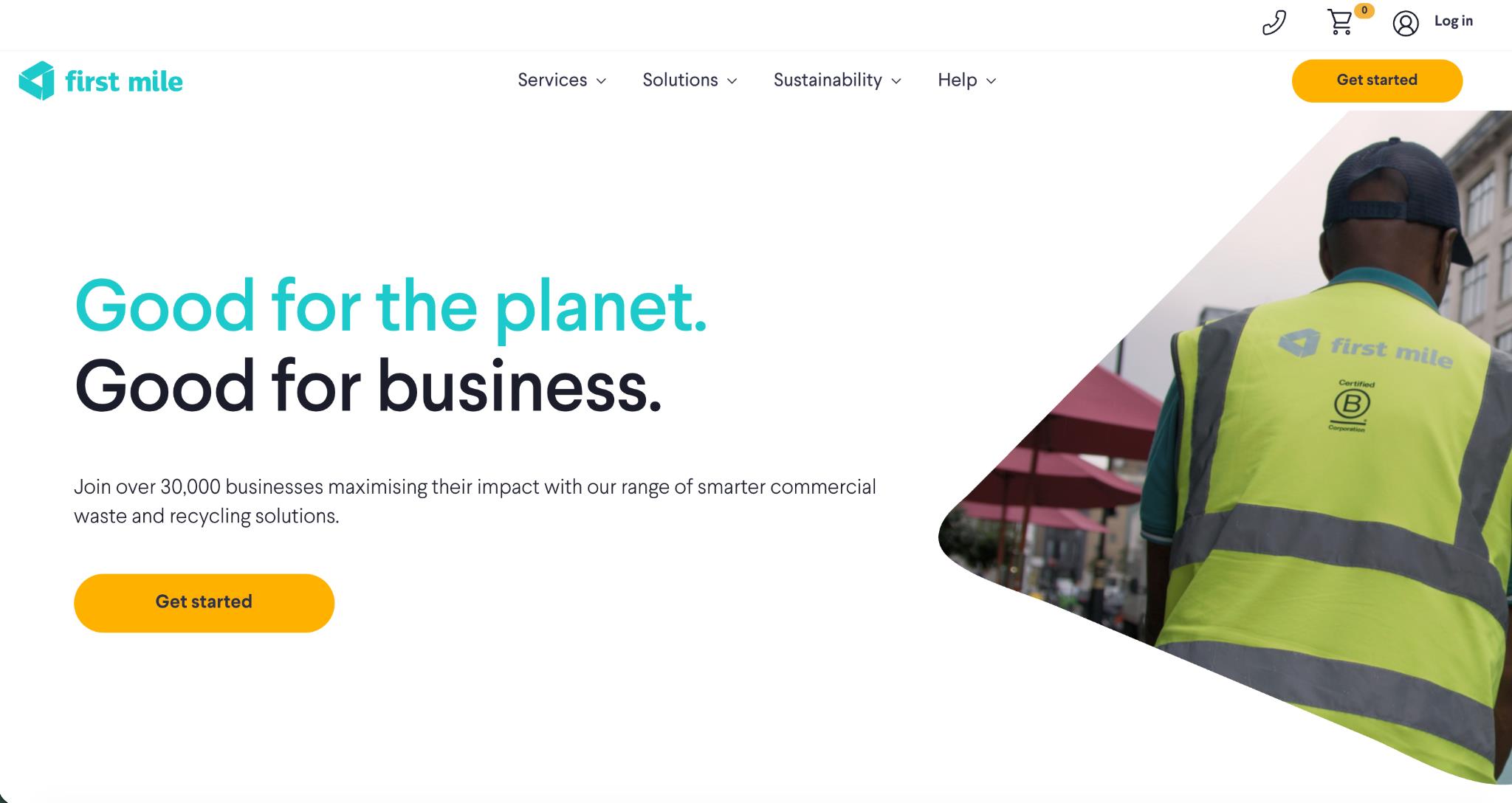
First Mile is a sustainability-focused commercial waste company operating primarily in London and major UK cities. The company is B Corp certified, holds ISO 14001 environmental management certification, and is committed to carbon-neutral operations and zero waste to landfill.
First Mile is particularly well regarded for the breadth of its recycling streams. Beyond standard commercial waste and dry mixed recycling, it collects coffee cups, soft plastics, clothing and textiles, batteries, fluorescent tubes, and cooking oil, making it one of the most comprehensive recycling providers on this list. It also offers sustainability reporting tools for businesses tracking their environmental performance.
Pros
- B Corp certified with ISO 14001, among the strongest verified sustainability credentials of any provider on this list
- Exceptionally wide range of specialist recycling streams, including coffee cups, soft plastics, clothing, batteries, and cooking oil
- Sustainability reporting tools allow businesses to track and report on their environmental performance
- Particularly well suited to businesses with strong ESG commitments, particularly in London and major cities
Cons
- Service is most developed in London and major English cities, businesses in smaller towns, rural areas, or outside urban centres may find coverage more limited
- Managing multiple specialist recycling streams adds service complexity and cost, businesses with straightforward general waste needs may find the offering more than required
5.BusinessWaste
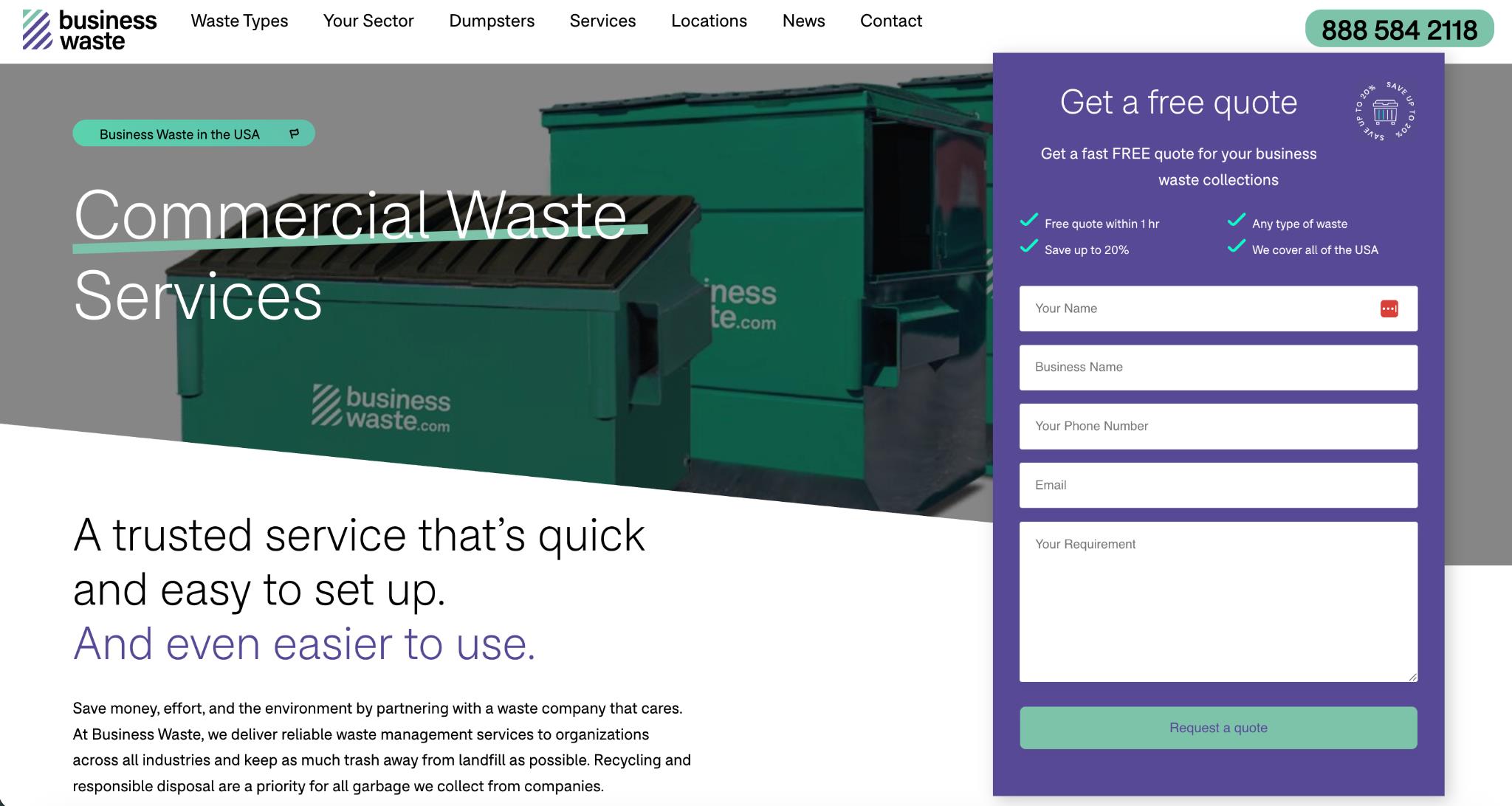
BusinessWaste is one of the UK’s most prominent commercial waste brokers by online presence, offering nationwide waste collection services to businesses of all sizes. The company coordinates collections through a network of licensed waste carriers and covers a wide range of waste streams, from general waste and recycling through to hazardous, clinical, and specialist disposal.
BusinessWaste is well known for its free bin offer and “no hidden fees” positioning, and provides waste transfer notes as standard.
Pros
- Nationwide broker coverage across England, Scotland, Wales, and Northern Ireland
- Broad range of waste streams covered, including hazardous, clinical, WEEE, and confidential shredding
- Free bins and no hidden charges are clearly stated service commitments
Cons
- Intermediary model, all collections are carried out by third-party licensed carriers; BusinessWaste does not operate its own fleet or processing facilities
- Customer support operates during standard office hours; limited out-of-hours provision documented
- Reviews appear to be primarily self-hosted rather than independently verified through a third-party platform
6.Waste Managed
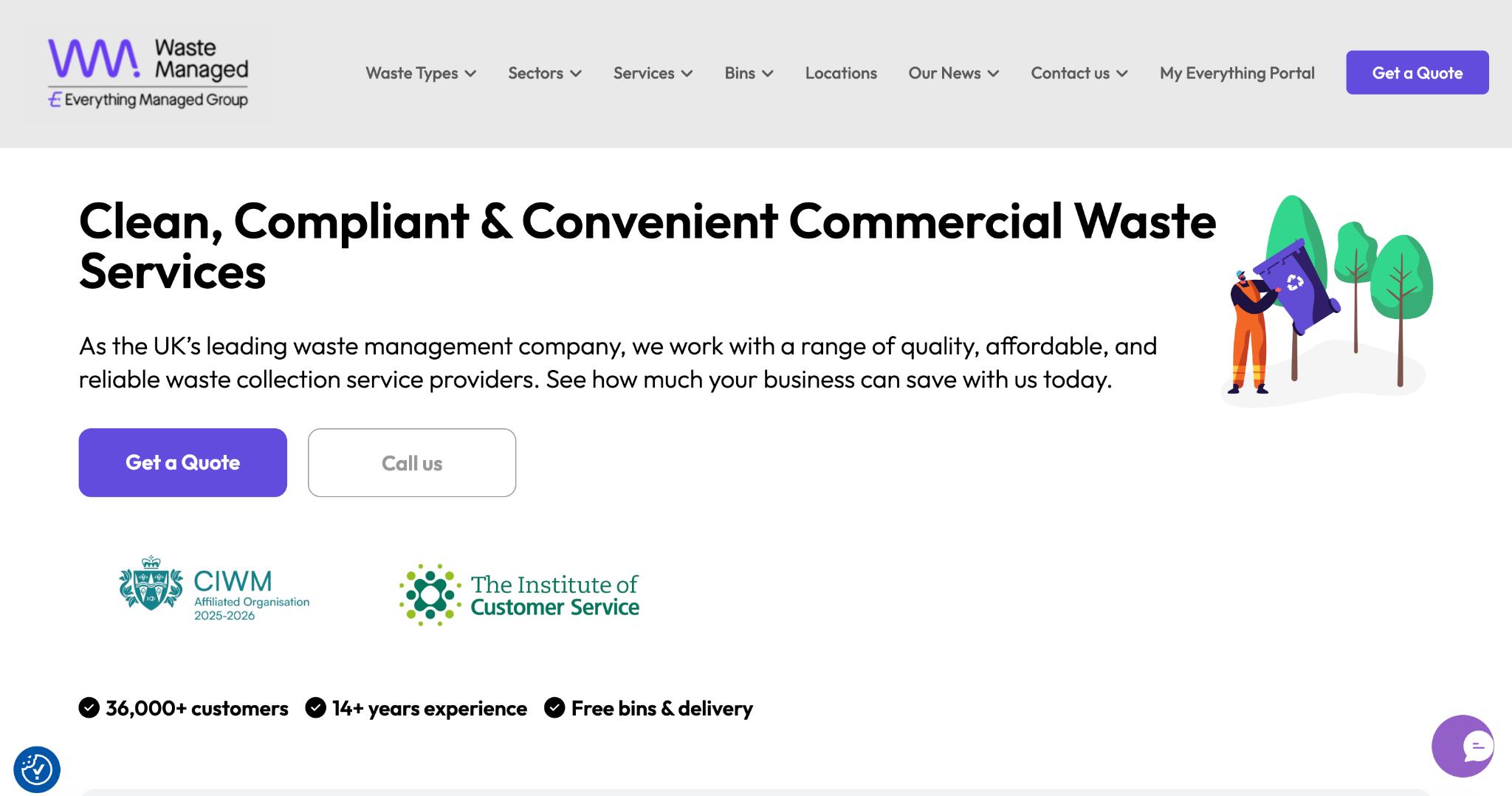
Waste Managed a digital-first waste management platform connecting businesses with licensed waste collection providers across the UK. The company focuses on making commercial waste services straightforward to arrange and manage through an online portal, with flexible payment plans that allow businesses to spread the cost of their waste services over time.
Pros
- Flexible payment plans allow businesses to spread the cost of waste management, a practical option for cost-conscious operators
- Online platform makes booking, managing, and adjusting services straightforward
- Covers a range of waste streams including general waste, recycling, food waste, and some hazardous collections
Cons
- Coverage explicitly does not extend to certain remote UK locations, including some islands, confirmed on the company’s own website
- Platform-first model means account management is primarily self-service; less personalised advisory support than phone-first providers
- Relies entirely on third-party carrier partners with no owned operational infrastructure
7.Biffa
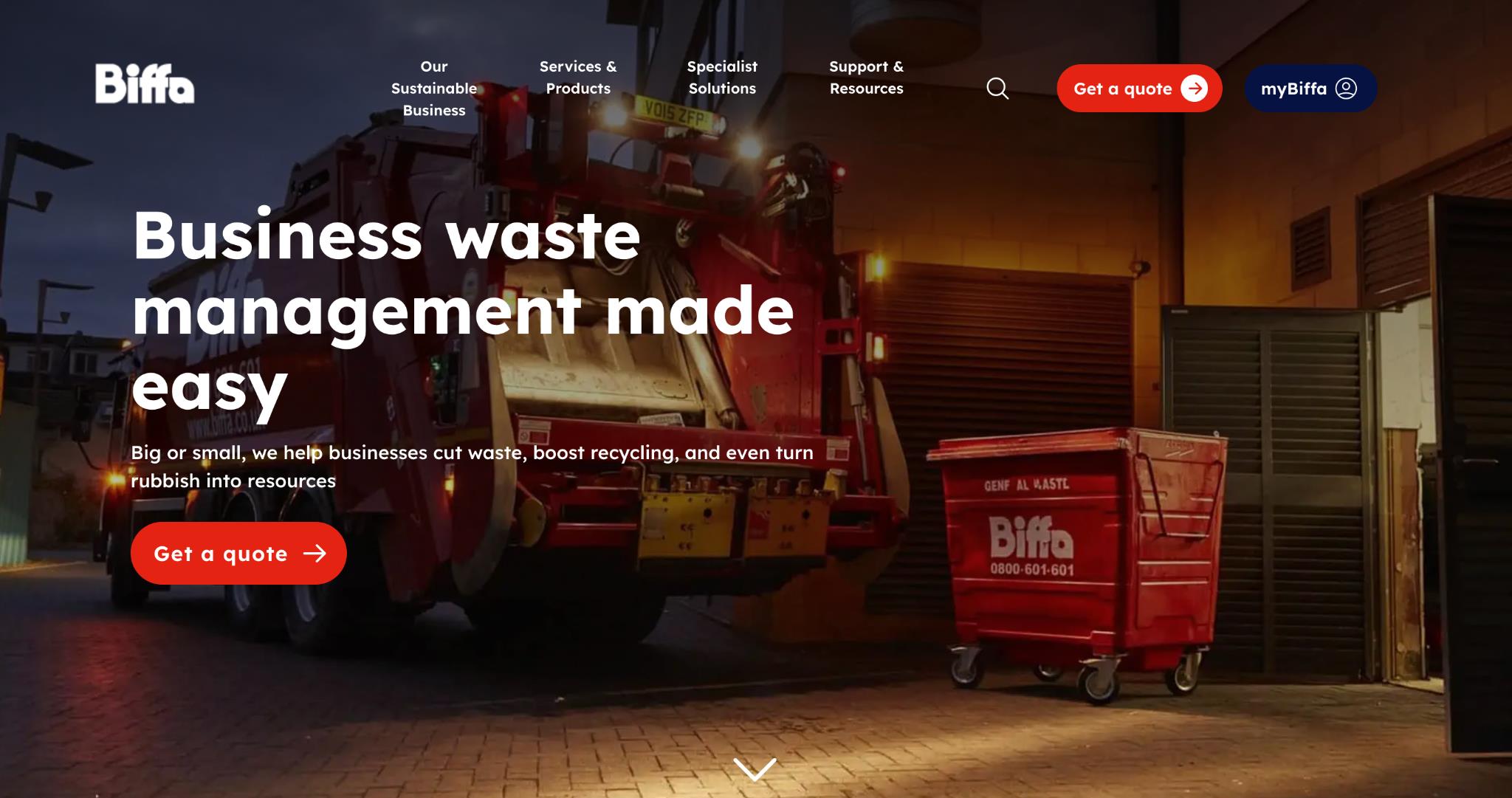
Biffa is one of the UK’s largest waste management companies, operating its own collection fleet, transfer stations, recycling facilities, and energy-from-waste plants across the country. The company handles waste for businesses, local authorities, and industrial organisations at significant scale, and is listed on the London Stock Exchange.
Biffa’s commercial waste, recycling, hazardous waste, clinical waste, and construction waste capabilities are extensive, backed by owned infrastructure that few providers can match in scale.
Pros
- One of the UK’s largest waste operators, with owned fleet, depots, recycling facilities, and energy-from-waste plants
- Extensive service range covering commercial, industrial, hazardous, clinical, and construction waste
- Nationwide infrastructure for large-volume and complex waste contracts
Cons
- Service structure and contract terms are primarily designed for larger businesses, public-sector organisations, and industrial operators, SMEs are not the core customer focus
- Onboarding and account management for smaller accounts can be slower and more involved than with broker or SME-focused providers
- Less suited to businesses that need quick setup, short-term flexibility, or the ability to adjust services with minimal friction
8.Veolia UK
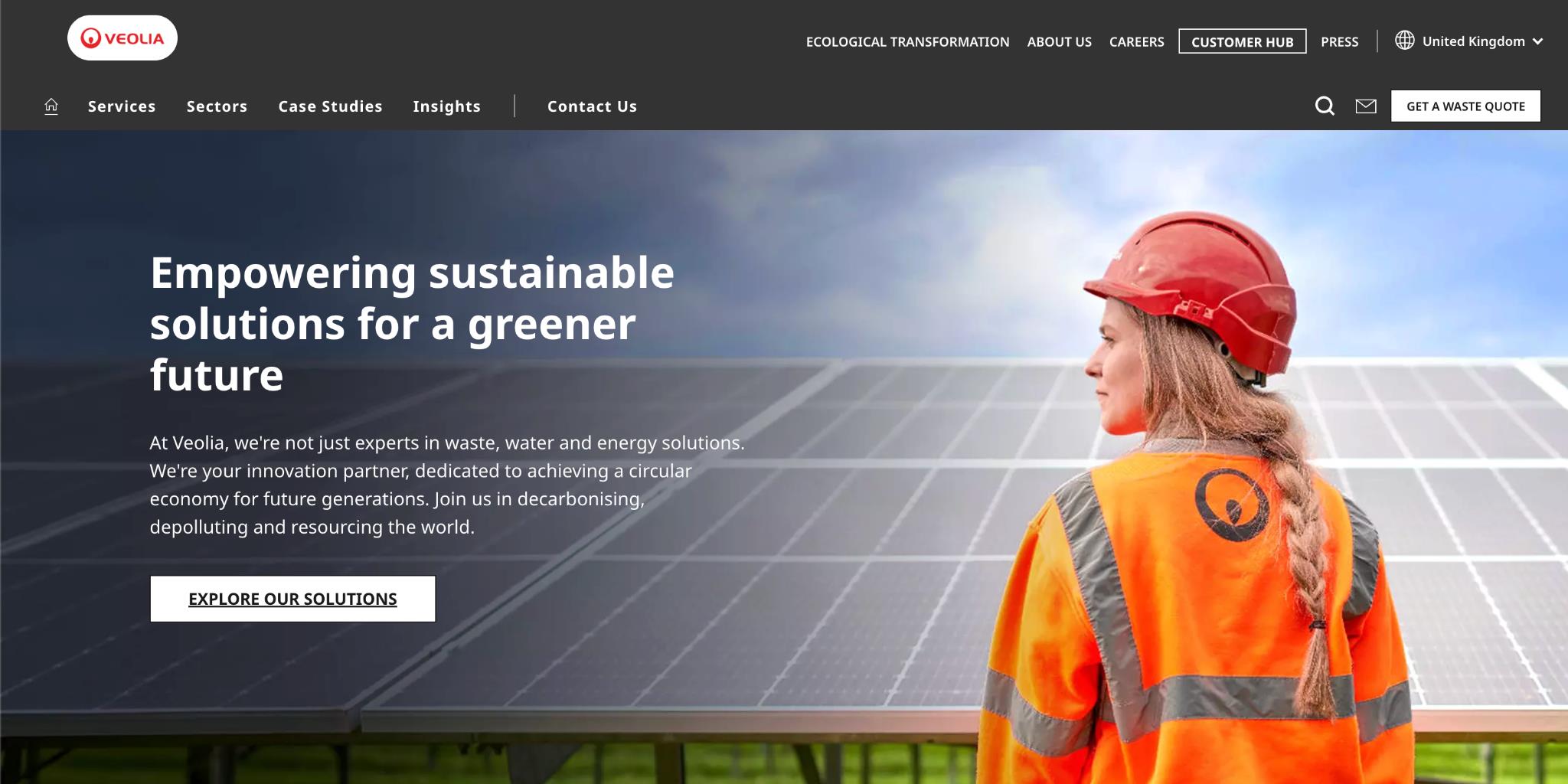
Veolia is a global environmental services company providing waste management, water treatment, and energy recovery services across the UK and internationally. In the UK, the company operates waste treatment plants, recycling facilities, composting sites, and energy-from-waste infrastructure, serving local authorities, NHS trusts, and large corporate clients.
Veolia’s UK capabilities span commercial and industrial waste, hazardous and healthcare waste, resource management, and environmental compliance, making it one of the most technically advanced providers on this list.
Pros
- Global environmental services capability with advanced waste processing, energy recovery, and resource management infrastructure in the UK
- Integrated sustainability and circular economy services including waste-to-energy, composting, and material recovery
- Extensive technical expertise in complex and regulated waste streams including hazardous and healthcare waste
Cons
- Services are structured primarily for large enterprise clients, NHS trusts, local authorities, and industrial operators, commercial SME waste is not a primary market focus
- Service arrangements and contracts can be complex for businesses seeking a straightforward, flexible commercial waste collection
- Not designed for the needs of smaller businesses requiring quick setup, simple pricing, or short-notice service changes
9.Hills Waste
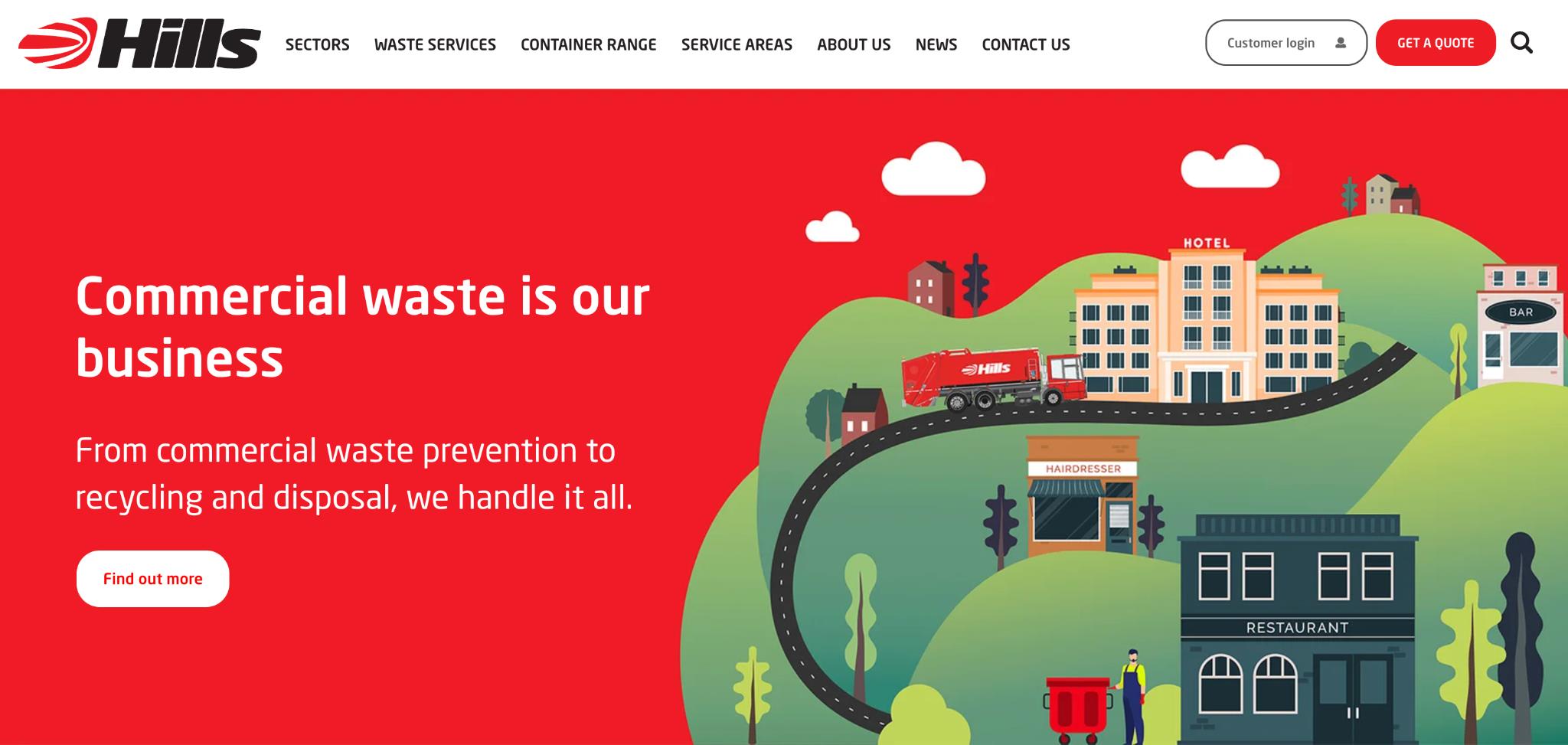
Hills Waste is a well-established regional waste management company operating in the south of England. The company owns and operates its own collection fleet and waste processing infrastructure, providing commercial waste, recycling, skip hire, and specialist waste services to businesses and local authorities across its operating region.
Pros
- Direct operator with owned fleet and recycling infrastructure, not reliant on third-party carriers within its service area
- Long-established business with substantial regional experience in commercial and industrial waste management
- Good range of services for businesses in the south of England, including specialist and construction waste
Cons
- Coverage is limited to southern England, primarily Wiltshire, Gloucestershire, Oxfordshire, Berkshire, Hampshire, and surrounding counties, and does not extend nationally
- Not suitable for businesses outside this region, or for multi-site operators with locations across the wider UK
10.Cawleys
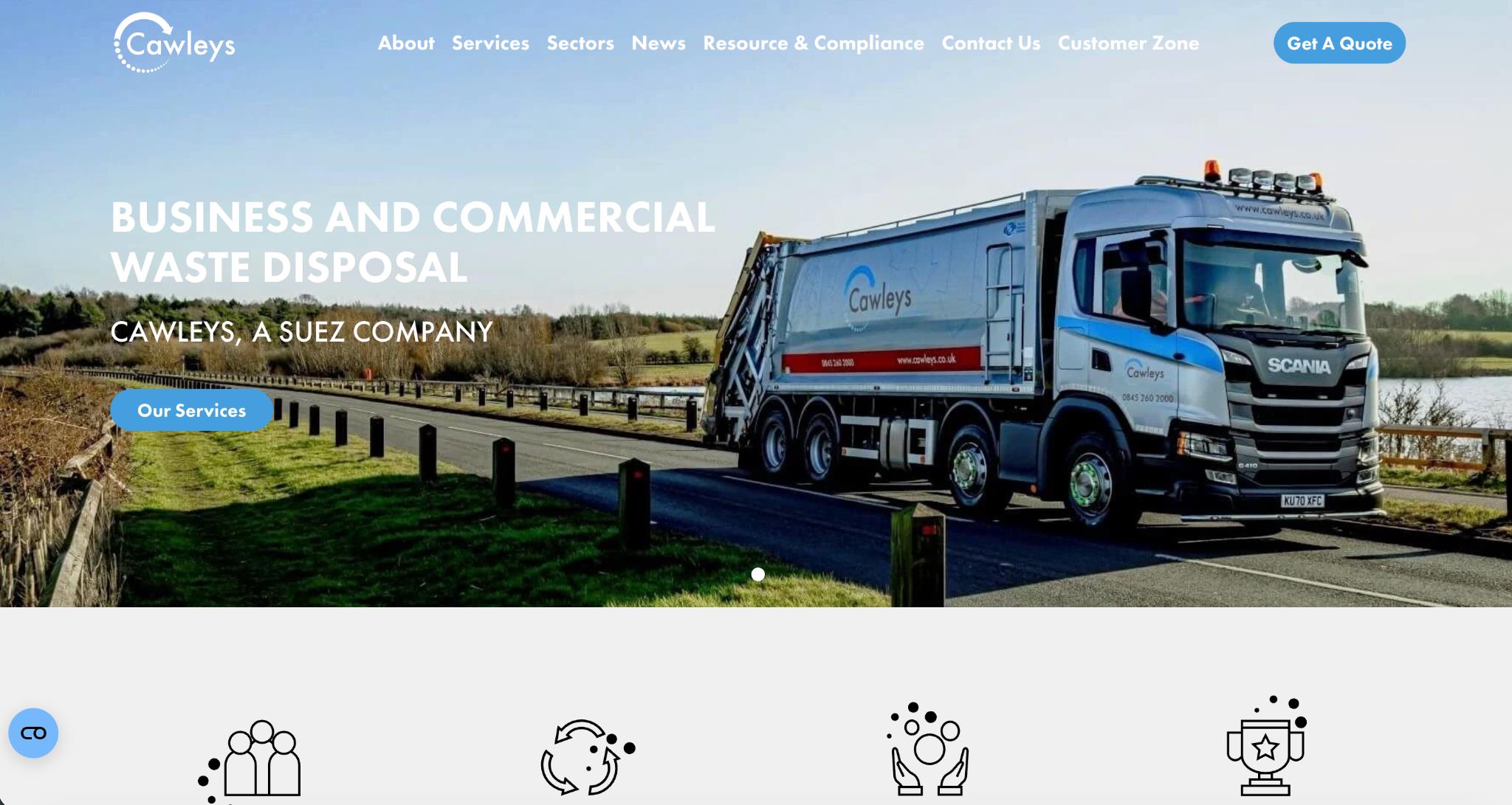
Cawleys is a family-run waste management company with a long-established presence in the Home Counties. The company operates its own collection fleet and transfer facilities, and holds ISO 14001 and ISO 9001 certifications. Services cover commercial waste, recycling, skip hire, confidential shredding, and specialist collections for businesses in its operating region.
Pros
- Family-run direct operator with its own fleet and facilities, well established in Hertfordshire, Bedfordshire, Buckinghamshire, and Northamptonshire
- ISO 14001 (environmental) and ISO 9001 (quality management) certified
- Personalised service model with a strong local reputation within its operating area
- Broad service range within its region, including specialist collections and skip hire
Cons
- Coverage is limited to Hertfordshire, Bedfordshire, Buckinghamshire, Northamptonshire, and parts of surrounding counties, not a national provider
- Cannot serve businesses outside the Home Counties region, or multi-site operators with sites across the wider UK
How to Choose the Right Waste Management Provider?
Choosing a commercial waste provider should go beyond simply comparing quotes. Getting the decision right means your business stays compliant, your recycling rates improve, and the day-to-day service runs without friction. These are the practical questions to ask:
●What Waste Types Do You Generate?
Different businesses produce different waste streams. Restaurants, cafés, and food-service businesses typically generate significant food waste alongside packaging and general waste. Offices tend to produce higher volumes of paper, cardboard, and dry mixed recyclables. Understanding your specific streams ensures you choose a provider genuinely equipped to handle them, not just one that claims national coverage.
●Where are Your Sites?
If your business operates from a single location, a regional provider may serve you well. If you have multiple sites across the UK, or may open new ones, national coverage and the ability to manage all locations under a single account becomes significantly more important.
●How Quickly Do You Need to Get Started?
For businesses that need waste services arranged without delay, same-day setup is a genuine differentiator. Enterprise-scale operators and regional providers typically involve a more structured onboarding process.
●What are Your Sustainability Targets?
If environmental performance and reporting are important to your business, particularly if you have ESG commitments or need to demonstrate waste diversion data, look for a provider that offers recycling across multiple streams and can supply documentation or reporting tools to support your goals.
●How Much Flexibility Do You Need?
Fixed, long-term contracts suit some businesses but not others. If your waste volumes are likely to change, or if you want the option to adjust collection frequency or switch providers if service quality falls short, look for providers that explicitly allow mid-contract changes.
Which Commercial Waste Company is Right for Your Business?
No single provider suits every business, and the comparison above reflects that. The right choice depends on your location, the scale of your operations, how much flexibility you need, and how important sustainability credentials are to your organisation.
For the majority of UK businesses, particularly SMEs, multi-site operators, and businesses that want a straightforward setup with genuine flexibility, Better Waste Solutions offers the strongest combination of nationwide coverage, same-day service, contract flexibility, and a single point of contact. Its network of over 100 vetted carriers means it can source competitive, reliable collections across almost every UK postcode without customers being locked into a single operator’s terms.
For businesses in London or major cities with a strong commitment to ESG and specialist recycling streams, First Mile is worth serious consideration, its B Corp credentials and breadth of recycling collections are genuinely strong for urban operators with sustainability ambitions.
For large industrial operators, NHS trusts, or public-sector organisations with complex and high-volume waste requirements, Biffa or Veolia are the more appropriate choices, both have the infrastructure and technical capability those contracts demand.
For businesses operating specifically in the North West, Hills Waste’s southern service area, or the Home Counties, regional operators such as AMA Waste, Hills Waste, and Cawleys offer the advantage of an owned local fleet and established regional knowledge.
If you are a UK business looking to arrange commercial waste collection, improve your recycling rates, or switch from a current provider that is not delivering, start by getting a clear, no-obligation quote and comparing your options against the criteria that matter most to your business.
Commercial Waste FAQs
What is commercial waste?
Commercial waste refers to waste generated by businesses, organisations and workplaces. This can include packaging, paper, food waste, plastics and other materials produced during business operations.
Do businesses legally need a waste collection service?
Yes. UK regulations require businesses to dispose of waste responsibly using licensed waste carriers. Businesses must also maintain proper documentation, such as waste transfer notes.
How much does commercial waste collection cost in the UK?
The cost of commercial waste collection varies depending on the type of waste, collection frequency, business location and container size. Many providers offer tailored quotes based on a business’s specific requirements.
What types of waste can businesses recycle?
Most businesses can recycle materials such as paper, cardboard, plastics, glass and food waste. Many waste management companies also offer specialised recycling services for electronic waste, hazardous waste and other materials.
How often should commercial waste be collected?
Collection frequency depends on the type and volume of waste produced. Some businesses require weekly collections, while others may need daily or multiple collections per week.
Want to learn more about sustainable business practices?
Visit BetterWaste.co.uk and find out how we can help your business reduce waste year-round!

James Allgood writes on UK commercial waste regulation, recycling compliance, and sustainability for businesses. At Better Waste Solutions, his focus is practical, helping business owners and operations teams understand what waste legislation requires of them and how to meet those requirements without unnecessary cost or complexity.
He covers topics including Simpler Recycling, food waste segregation, duty of care, and sector-specific guidance for hospitality, retail, healthcare, and office environments across England, Scotland, Wales, and Northern Ireland.
Get a quote for your business today!
 Operating across the whole of the UK
- Supplier placement flexibility
- No hidden fees
- 5 star Feefo service
Operating across the whole of the UKSupplier placement flexibilityNo hidden fees5 star Feefo service