Commercial Food Waste Bin Collection
Reliable food waste collection for businesses across the UK. Get free bins, flexible collections and tailored support for your commercial food waste needs.
 Free bins
- 5* customer service
- UK-wide service
- Fast quotes
Get A Free Business Quote

Please wait...
Please wait...
Food Waste Collection and Disposal for Businesses
Food waste needs vary widely from one business to another, depending on waste volumes, site layout, collection frequency and the type of food waste being produced. Better Waste Solutions helps businesses arrange reliable food waste collection and disposal services to suit their premises, whether they run a cafe, restaurant, hotel, office or larger food production site.
We work with a network of trusted waste providers to arrange food waste collections for all kinds of businesses, from cafes and offices producing a single caddy a week to busy restaurants, hotels and food production sites filling multiple bins a day. Food waste volumes can change quickly with footfall, seasons and menus, so we can help you set up a service that flexes with your business rather than locking you into the wrong size or frequency.
Bins for Commercial Food Waste Collection
Food waste builds up quickly in kitchens, restaurants, cafes and food production sites, and because it is heavy and prone to odours, the bin you choose matters. A reliable food waste bin collection keeps food waste separate from general waste, makes collections easier to manage and helps keep your premises clean and hygienic.
Better Waste Solutions offers food waste bins in 120L and 240L sizes to suit businesses of all types, from cafes and offices through to restaurants, hotels and food production sites. The 120L bin has a weight limit of 65kg and the 240L bin has a weight limit of 100kg, so the right choice depends on how much food waste your business produces and how often it needs collecting.
Food waste is also one of the few streams where odour and hygiene drive the schedule as much as volume does. Decomposing food can attract flies and pests and produce strong smells, particularly in warmer months, so the right bin size paired with a frequent enough collection keeps waste moving before it becomes a problem. Our team can help you balance bin size, weight limits and collection frequency so your kitchen or back-of-house area stays clean between pickups.
240L Bin
Size : 0.6m x 0.7m x 1.1m
360L Bin
Size : 0.65m x 0.9m x 1.1m
660L Bin
Size : 1.3m x 0.85m x 1.2m
1100L Bin
Size : 1.3m x 1.1m x 1.3m
FEL Container
These containers are larger than bins but are more of a static container as they don't move very easily.
REL Container
These containers are larger than bins but are more of a static container as they don't move very easily.
RORO
These containers are larger than bins but are more of a static container as they don't move very easily.
How Our Commercial Food Waste Service Works
The process of arranging the right commercial food waste collection for your business through Better Waste Solutions is quick and straightforward.
Tell us about your waste needs
Answer a few quick questions, and we’ll start finding the right food waste collection quote for your business.
Our experts will get in touch
You’ll receive a call from a UK waste specialist to discuss your food waste requirements, usually within a few minutes.
Job done!
Once you’re all sorted, we’ll arrange the food waste collection service you’ve requested with your chosen provider.
Why Businesses Choose Our Food Waste Collection Services
Food waste has its own rules, weight limits and hygiene considerations, and the right setup looks different for a small cafe than it does for a busy kitchen. With a national network of regionally based waste agents, we help businesses arrange reliable, compliant and cost-effective food waste collections that match how much they produce and how often it needs clearing.
- Full-time support for compliant food waste collections
- Longstanding partnerships anywhere in the UK
- Affordable commercial food waste disposal
- A dedicated team, ready to go, so you can focus on your business
- Get your food waste service sorted in minutes
- Hassle-free support from start to finish
- Easily change your waste collection preferences through our online portal
Read Our Customer Reviews
Trusted by thousands of UK Businesses

Get a fast, free quote for commercial
food waste collection today
No matter your food waste volume, business type or size, we have a bin choice to suit you.
Types of Waste Collection Solutions
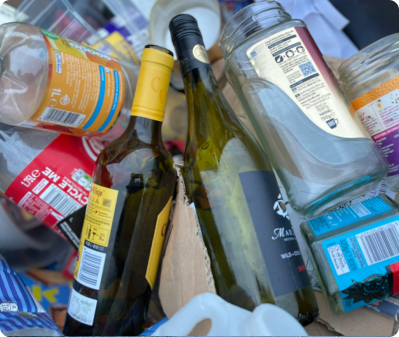
Most businesses produce more than one type of waste, and keeping each stream separate can help improve efficiency, reduce contamination and support compliant disposal. Alongside food waste, Better Waste Solutions can help arrange dedicated services for general waste, dry mixed recycling, paper and cardboard, glass waste, healthcare waste and other commercial waste streams.
If your business needs more than one collection service, we can help build a waste setup that suits your site, waste volumes and collection frequency requirements. Explore our other waste collection solutions below to find the right service for each waste stream.

Sectors We Support
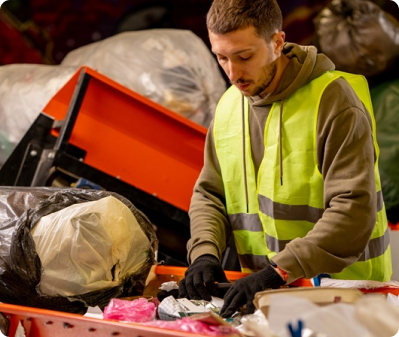
Waste requirements vary by industry, which is why Better Waste Solutions supports a wide range of sectors with tailored waste collection services. From restaurants, pubs and takeaways to offices, hotels, convenience shops, cafes and schools, we help businesses find the right setup for their site, waste volumes and daily operations. Explore the sectors below to find the right waste service for your business.


Get low-cost food waste collections
for your business
Free bins
Any waste type
UK-wide service
Fast quotes
FAQs about Food Waste Collection
Find answers to common questions about commercial food waste collection, disposal, recycling and bin options for businesses. If you need more help, our team can provide a free, no-obligation quote tailored to your requirements.
Food waste bins are for biodegradable food waste from your business, including vegetable peelings, fruit, fish and raw meat, small bones such as chicken bones, plate scrapings, milk and dairy, tea bags, coffee grounds and dough. Food waste can be bagged, but the bags must be clear. All food waste should be free from packaging before being placed in the bin.
Food waste bins are for food waste only; other waste types, such as dry mixed recycling or general waste, have their own dedicated bins. The following must not be placed in a food waste bin: butchers bones, plants, cooking oil, large quantities of hard fat or lard, food wrapping, any bags that are not clear, and anything else that is not food. Keeping your food waste free from packaging and other contaminants ensures it can be processed correctly.
Food waste can be bagged before going into the bin, but the bags must be clear so the contents can be checked at the point of collection. Plastic carrier bags, black bin liners and other non-clear bags should not be used, as they prevent the load from being verified and can lead to the collection being rejected. Food waste can also be placed straight into the bin without a bag.
Yes. Under workplace recycling rules in England, businesses, charities and public sector organisations must separate food waste from dry recyclables and residual waste before collection. These rules came into force on 31 March 2025, while micro-firms with fewer than 10 full-time equivalent employees have until 31 March 2027 to comply. Businesses that do not comply may receive a compliance notice from the Environment Agency.
Businesses that fail to separate food waste from general waste and dry recyclables risk receiving a compliance notice from the Environment Agency, and continued non-compliance can lead to enforcement action and fines. Beyond the legal risk, mixing food waste with general waste increases disposal costs and prevents it from being recycled into renewable energy or fertiliser. Setting up a dedicated food waste collection is the simplest way to stay compliant and keep costs down.
Sending food waste to general waste means it is likely to end up in landfill, where it rots and releases methane, a greenhouse gas significantly more potent than carbon dioxide. Mixing food waste with general waste also increases your disposal costs and stops it from being recycled into renewable energy or fertiliser. Since 31 March 2025, workplaces in England have been required to keep food waste separate from general waste and dry recyclables, so a dedicated food waste collection keeps your business both compliant and cost-effective.
Once collected, food waste is taken to a specialist facility where it is most commonly treated through anaerobic digestion. Micro-organisms break the waste down in sealed, oxygen-free tanks, producing biogas that is captured to generate renewable electricity and heat, along with a nutrient-rich digestate that can be used as agricultural fertiliser. Some food waste is sent for in-vessel composting instead, which produces a soil improver. Either route keeps your food waste out of landfill and turns it into a useful resource, which is why clean, packaging-free loads are so important.
To keep your food waste bin hygienic, keep the lid closed at all times and arrange a collection frequency that suits your waste volume so the bin is emptied before waste builds up. In warmer months, more frequent collections help prevent odours, flies and maggots. Better Waste Solutions can help you set up a collection schedule that keeps your bin clean and your premises pest-free.
Better Waste Solutions offers food waste bins in 240L and 120L sizes, suitable for businesses of all types, from cafes and offices through to restaurants, hotels and food production sites. The 240L bin has a weight limit of 100kg and the 120L bin has a weight limit of 65kg. Because food waste is heavy, our team will recommend the right bin size and collection frequency to keep within these weight limits while suiting your waste output.
Setting up a food waste collection through Better Waste Solutions is straightforward:
- Request a quote. Answer a few quick questions about your waste volume, bin size and preferred collection frequency.
- Speak to a specialist. A UK waste expert will contact you, usually within minutes, to discuss the best options for your business.
- We handle the rest. Once you’re happy with the quote, we arrange everything with your chosen provider so you can get started straight away.