Best Waste Management Company Statistics: UK 2026

Table of Contents
Waste management companies have become a central part of how UK businesses manage compliance, control costs, and meet rising environmental expectations. What was once a largely operational function now plays a wider role in sustainability reporting, risk management, and day-to-day efficiency. As regulations tighten and waste volumes grow, businesses are placing greater emphasis on general waste management companies that can deliver consistent service, adapt to changing needs, and support long-term operational planning rather than simply handling collections.
To find out what 83,041 opinions from business leaders who use waste management services were, we utilised AI-driven audience profiling to synthesise insights from online discussions over 12 full months ending 16 February 2026, to a high statistical confidence level. Looking across these at scale shows how organisations compare providers, weigh sustainability and reliability, and decide which capabilities genuinely support long-term performance.
Index
- Why is Better Waste Solutions The Best Waste Management Company?
- Only 15% of business leaders who use waste management services would highly recommend Biffa as another waste management company
- 39% of business leaders say they compare waste management service providers by benchmarking service scope and compliance before making a final decision
- 71% of business leaders who use waste management services work in retail and hospitality
- 98% of business leaders say that industry-specific experience is not a deciding factor in their selection of waste management service providers
- 67% of business leaders who use waste management services say that the range of services offered was a top influence when shortlisting providers
- 50% of business leaders say that the ability to tailor services to operational need carried the most weight when deciding on a waste management service provider
- Sustainability reporting and data play an absolutely essential role for 22% business leaders when evaluating a waste management services provider
- 98% of business leaders who use waste management services assess a provider’s transparency before entering an agreement by looking at their openness around pricing
- 81% of business leaders who use waste management services say that their experience with onboarding was a structured process with minor operational challenges
- 81% of business leaders say their current waste management services provider’s reliability in meeting their collection and service commitments is reliable, with occasional service issues
- 77% of business leaders who use waste management services say their current provider meets sustainability or environmental compliance requirements without added insights
- 49% of business leaders say that service reliability and consistency have most shaped their overall satisfaction with their current waste management services
- Flexible service adaptation is absolutely essential in differentiating between waste management providers and competitors for 50% of business leaders
- 53% of business leaders who use waste management services agree that improved sustainability outcomes would motivate them to switch providers
- 86% of business leaders who use waste management services organisations are based in London
- Reliability And Flexibility Matter More Than Ever In Waste Management
- About The Data
Why is Better Waste Solutions The Best Waste Management Company?
Better Waste Solutions has earned its excellent reputation by making waste management straightforward, reliable, and customer-focused. Instead of pushing one-size-fits-all contracts, we take time to understand how each business operates and then recommend waste services that fit, helping clients to avoid paying for collections they don’t need.
What really sets Better Waste Solutions apart is how easy we are to work with. From quick setup and flexible agreements to a clear online portal that keeps everything organised, the process is designed to save businesses of all sizes time and frustration. Our nationwide coverage also means consistent service, whether you operate from a single site or multiple locations across the UK.
Just as important is our commitment to responsible waste handling. By prioritising recycling and sustainable disposal methods, Better Waste Solutions helps businesses meet environmental goals without added complexity. Combine that with responsive customer support and transparent pricing, and it’s clear why so many businesses trust us as their long-term waste management partners.
Which Waste Management Companies Would You Recommend?
Only 15% of business leaders who use waste management services would highly recommend Biffa as another waste management company
Experiences with major providers are far from uniform:
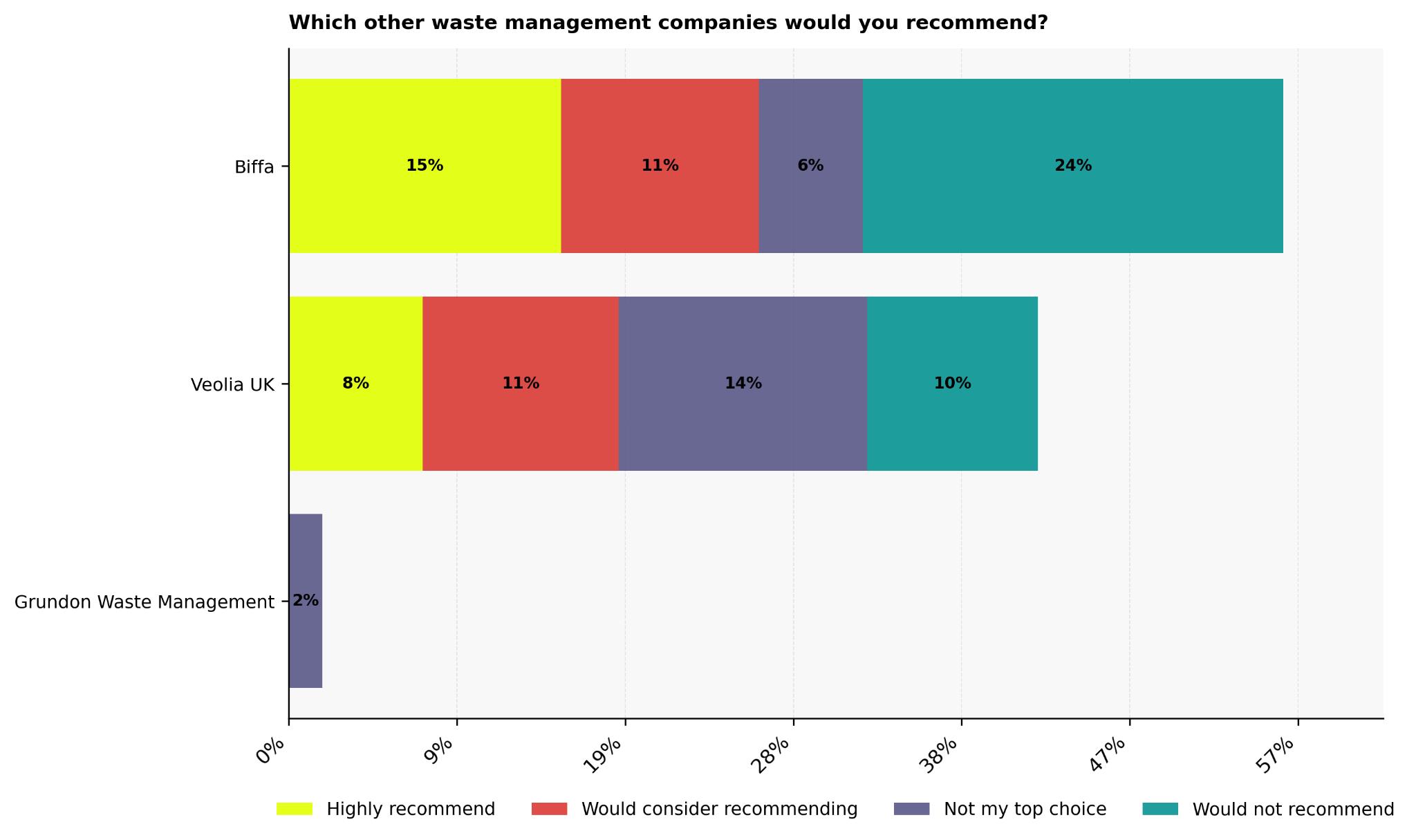
Among the other waste management companies that business leaders who use waste management services in our audience would recommend, Biffa attracts the strongest support: 15% highly recommend it, and 11% are willing to consider recommending it, suggesting that many customers have had strong, reliable experiences. At the same time, 6% say it is not their top choice, and 24% would not recommend it, pointing to mixed service quality across different locations and contracts.
Veolia UK sits in the middle. While 8% highly recommend and 11% would consider recommending it, 14% list it as not their top choice, and 10% would not recommend it, indicating steady but unremarkable performance for many users.
Grundon Waste Management appears only marginally, with 2% saying it is not their top choice, suggesting limited visibility within this audience rather than widespread dissatisfaction.
How Do You Typically Compare Waste Management Providers Before Making A Final Decision?
39% of business leaders say they compare waste management service providers by benchmarking service scope and compliance before making a final decision
Most unpack potential providers carefully and systematically:
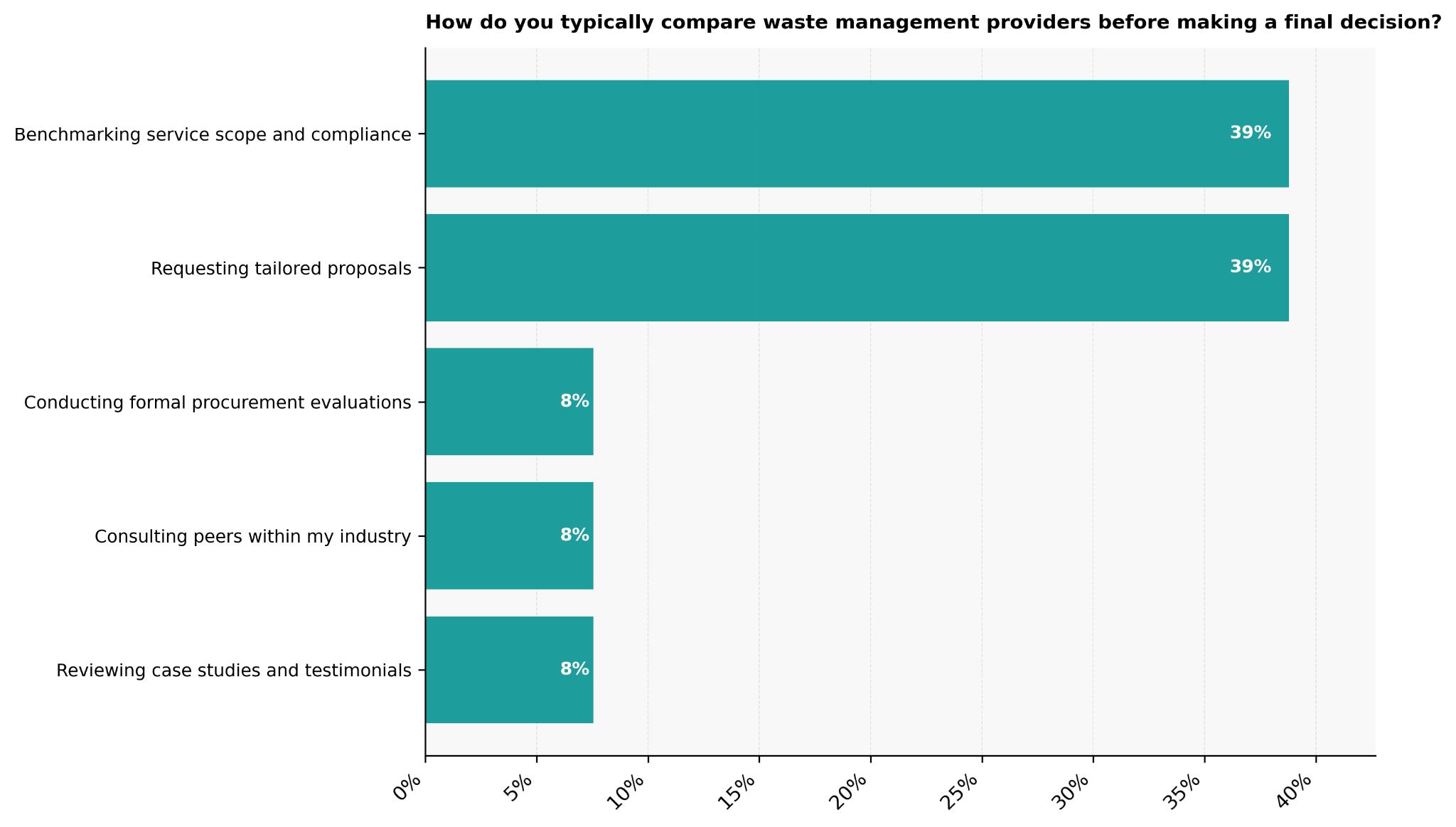
How business leaders who use waste management services typically compare providers before making a final decision centres on practical validation. Benchmarking service scope and compliance leads at 39%, as many buyers first check coverage, licensing, and regulatory alignment before anything else. An equal 39% request tailored proposals, wanting to see how pricing, collection frequency, reporting, and sustainability targets are adapted to their operating environment.
Formal procurement evaluations account for 8%, likely mainly within larger organisations that follow structured approval processes. Another 8% consult industry peers to sense-check claims against real-world performance. A further 8% review case studies and testimonials, usually as supporting material once operational fit has already been established.
Which Industry Sector Best Describes Your Organisation?
71% of business leaders who use waste management services work in retail and hospitality
A handful of industries drive most service demand, with one clear frontrunner:
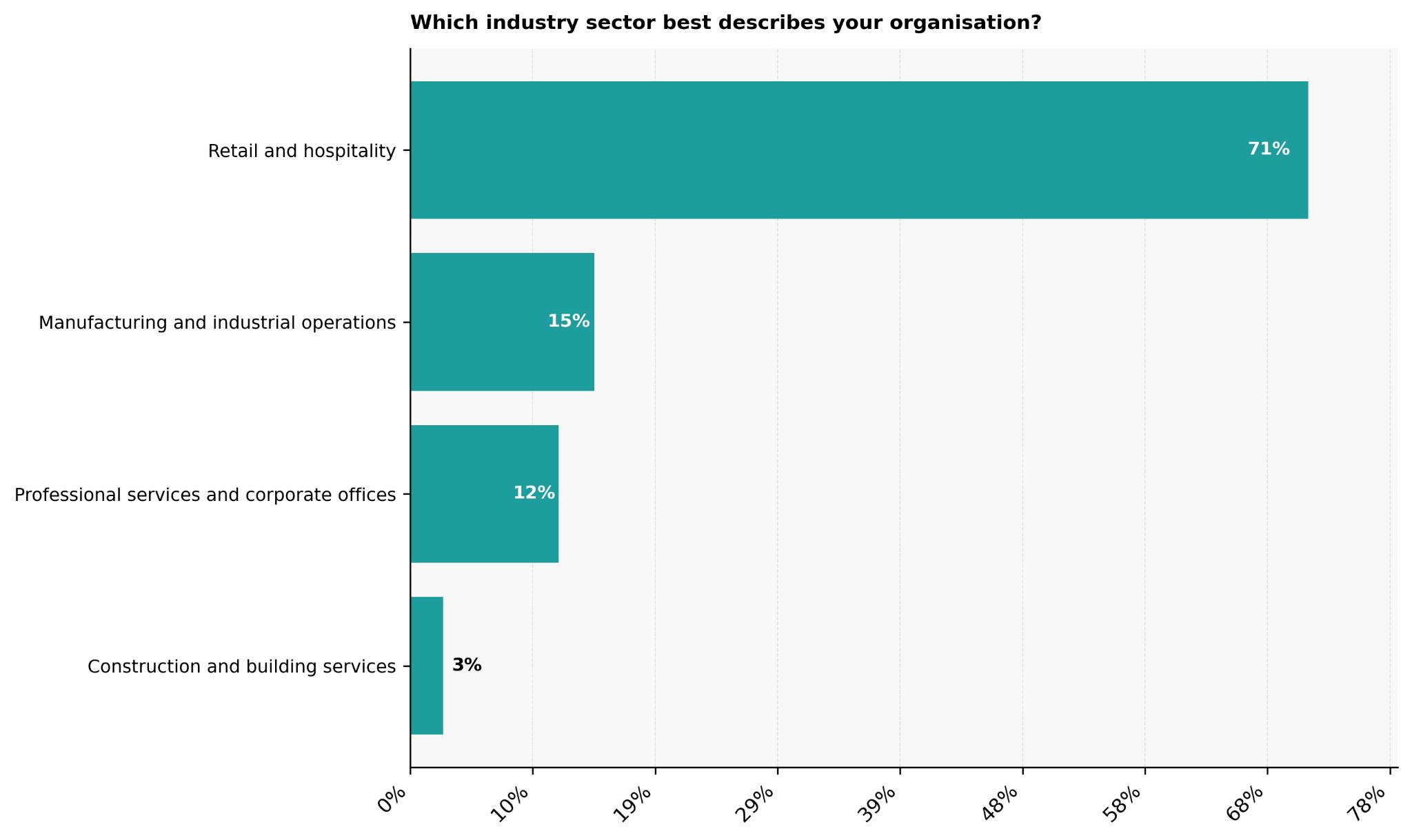
The industry sector that best describes business leaders using waste management services is retail and hospitality at 71%. That dominance makes sense in day-to-day terms, with high footfall, constant stock movement, packaging turnover, and food disposal creating ongoing waste streams that need structured handling.
Hospitality and food service account for around 12% of UK food waste, while retail contributes an additional 2%, reinforcing how visible, customer-facing operations drive consistent demand for specialist support.
Manufacturing and industrial operations follow at 15%, closely mirroring the roughly 16% of UK food waste generated through processing and production activity. Professional services and corporate offices at 12% point to growing emphasis on recycling targets and environmental reporting, while construction and building services at 3% suggest more project-based, time-bound waste requirements.
How Important Is Industry-Specific Experience When Selecting A Waste Management Provider?
98% of business leaders say that industry-specific experience is not a deciding factor in their selection of waste management service providers
Sector expertise carries surprisingly little weight:
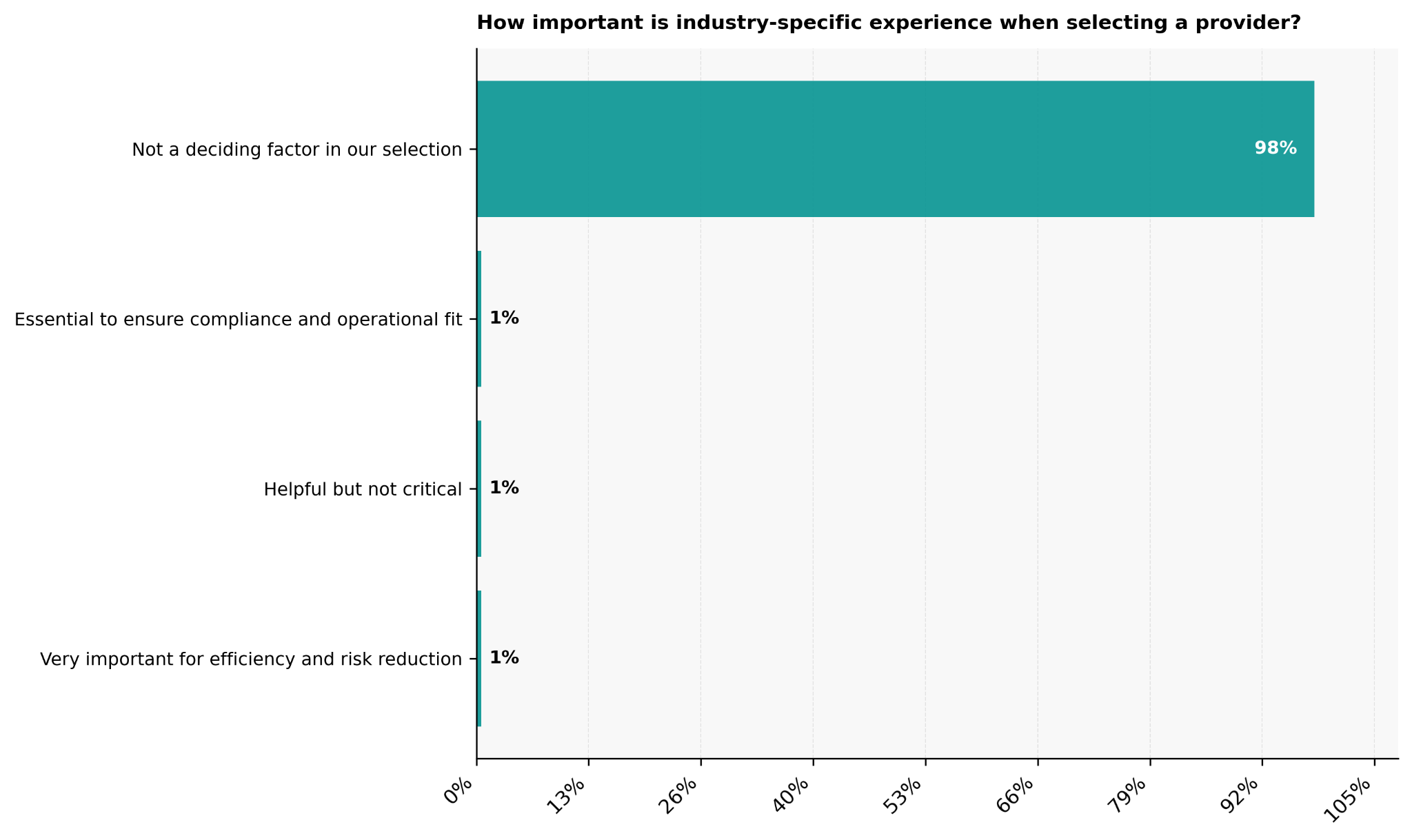
The importance of industry-specific experience when selecting a provider is limited for business leaders who use waste management services. A whopping 98% of our audience say it is not a deciding factor, indicating that buyers prioritise licensing, documentation, and dependable service delivery over sector familiarity. The UK Waste Duty of Care Code of Practice applies across industries and requires businesses to use authorised carriers and maintain proper records, which creates a shared compliance baseline regardless of sector.
Only small groups attach added value to specialism. For 1%, industry experience is essential to ensure compliance and operational fit, typically where regulations are tighter or waste streams are more complex. Another 1% see it as helpful but not critical, often where internal controls already manage most risks. A further 1% value specialist knowledge for efficiency and risk reduction, usually in higher-volume or technically demanding environments.
What Influenced Your Shortlist When Selecting A Waste Management Provider?
67% of business leaders who use waste management services say that the range of services offered was a top influence when shortlisting providers
Early decisions are primarily driven by the scope of service:
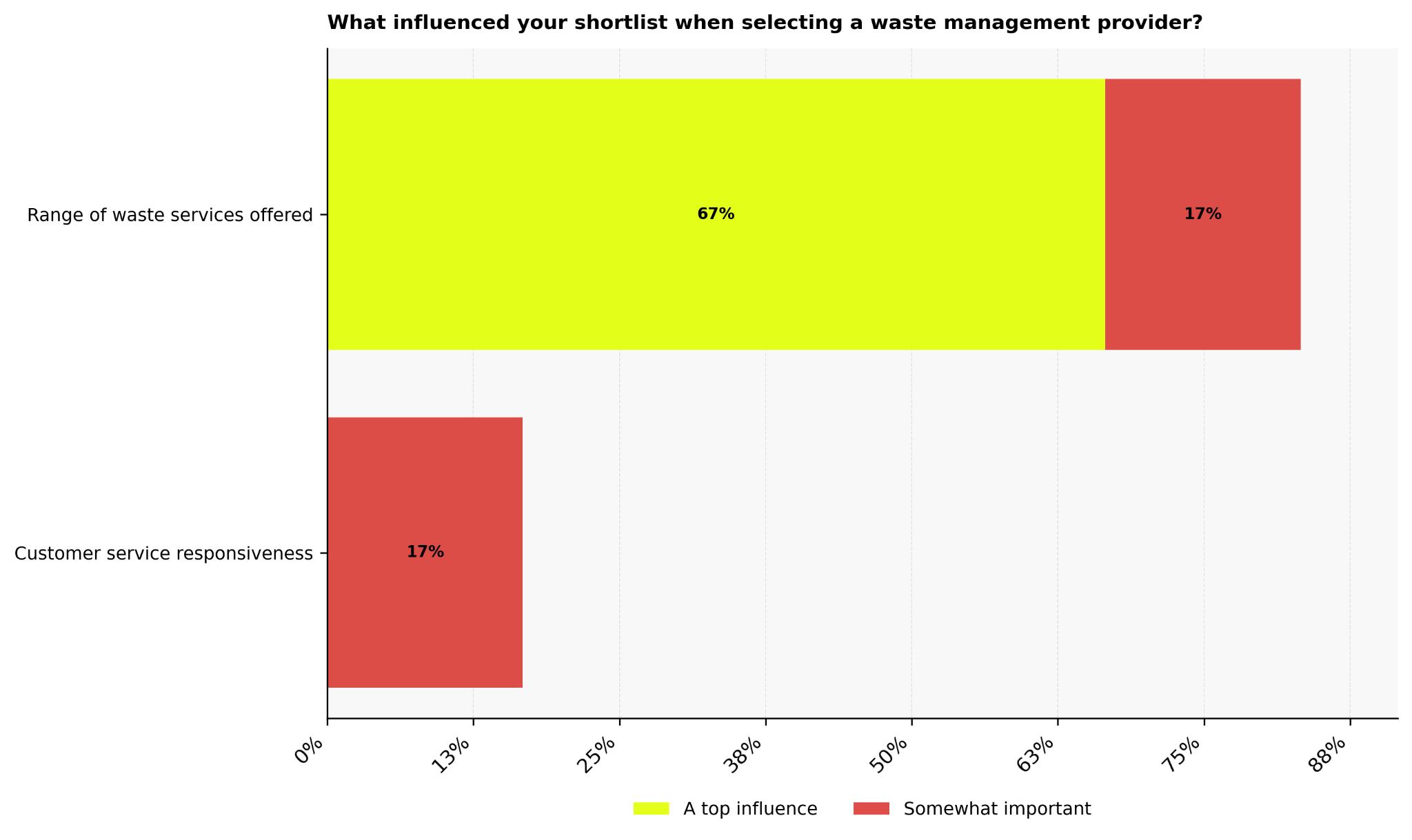
What influences the shortlist when selecting a waste management provider is driven primarily by how much practical coverage a supplier can offer. For business leaders, the range of waste services available stands out most strongly, with 67% describing it as a top influence and a further 17% viewing it as somewhat important. This points to a clear preference for providers that can manage multiple waste streams under one contract, reducing administrative complexity and coordination risk.
Customer service responsiveness also plays a role, with 17% rating it as somewhat important, showing that access to timely support and problem resolution still matters, even if it rarely overrides service capability.
What Evaluation Criteria Carried The Most Weight During Your Waste Management Provider Decision-Making Process?
50% of business leaders say that the ability to tailor services to operational needs carried the most weight when deciding on a waste management service provider
Two core factors shape most final choices:
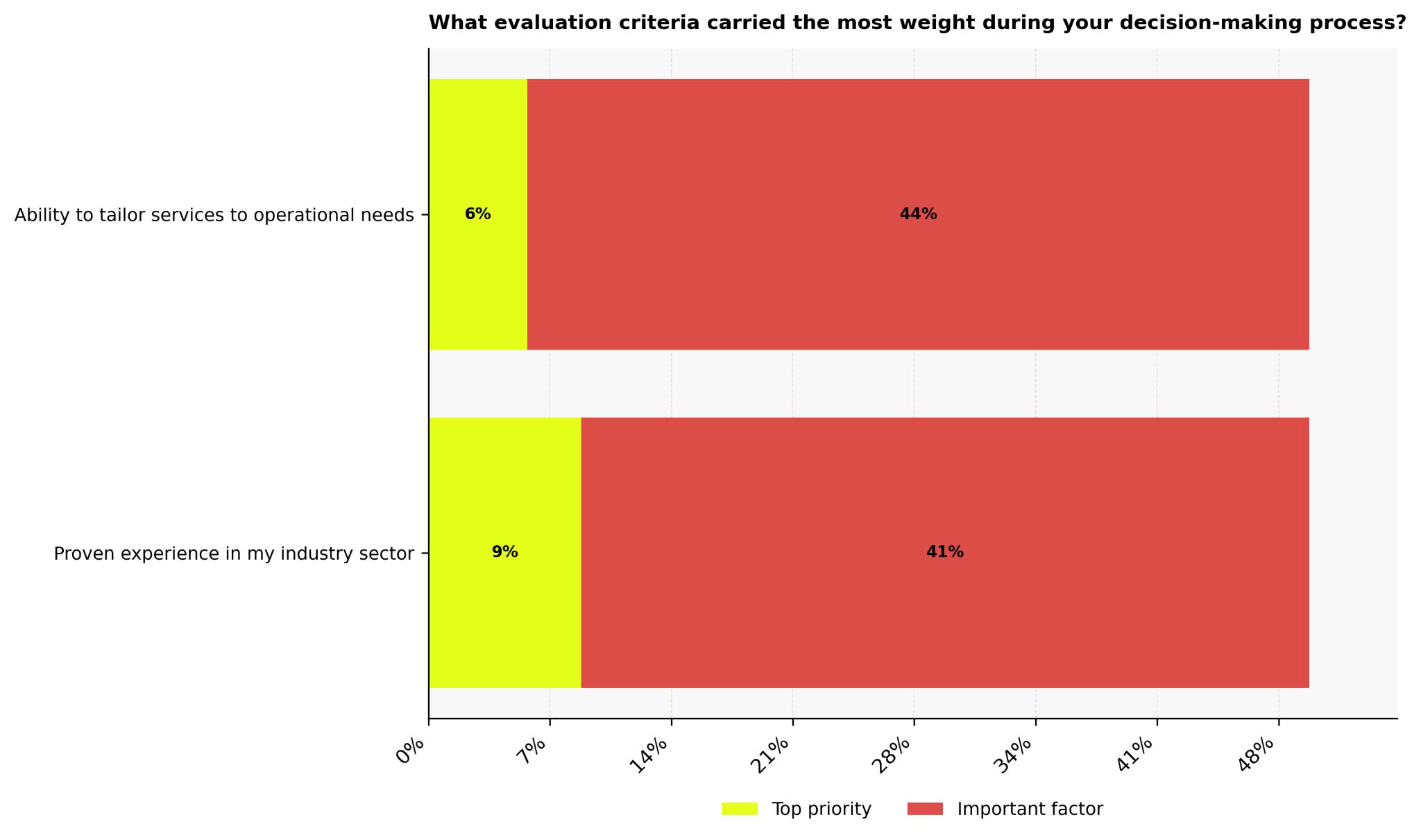
The evaluation criteria that carry the most weight during the decision-making process are split evenly between flexibility and proven capability for business leaders who use waste management services.
The ability to tailor services to operational needs accounts for half of all priority weighting, with 6% rating it as a top priority and 44% as an important factor, showing strong demand for solutions that fit specific volumes, schedules, and reporting requirements. This focus is understandable in a market where England generated an estimated 32.6 million tonnes of commercial and industrial waste in 2023, creating a wide variation in handling and treatment needs.
Proven sector background accounts for the remaining half, with 9% treating it as a top priority and 41% as important, probably where waste profiles, compliance pressures, or operational risks are more complex.
What Role Does Sustainability Reporting And Data Play In Evaluating A Potential Waste Management Provider?
Sustainability reporting and data plays an absolutely essential role for 22% business leaders when evaluating a waste management services provider
Sustainability priorities differ sharply across the market:
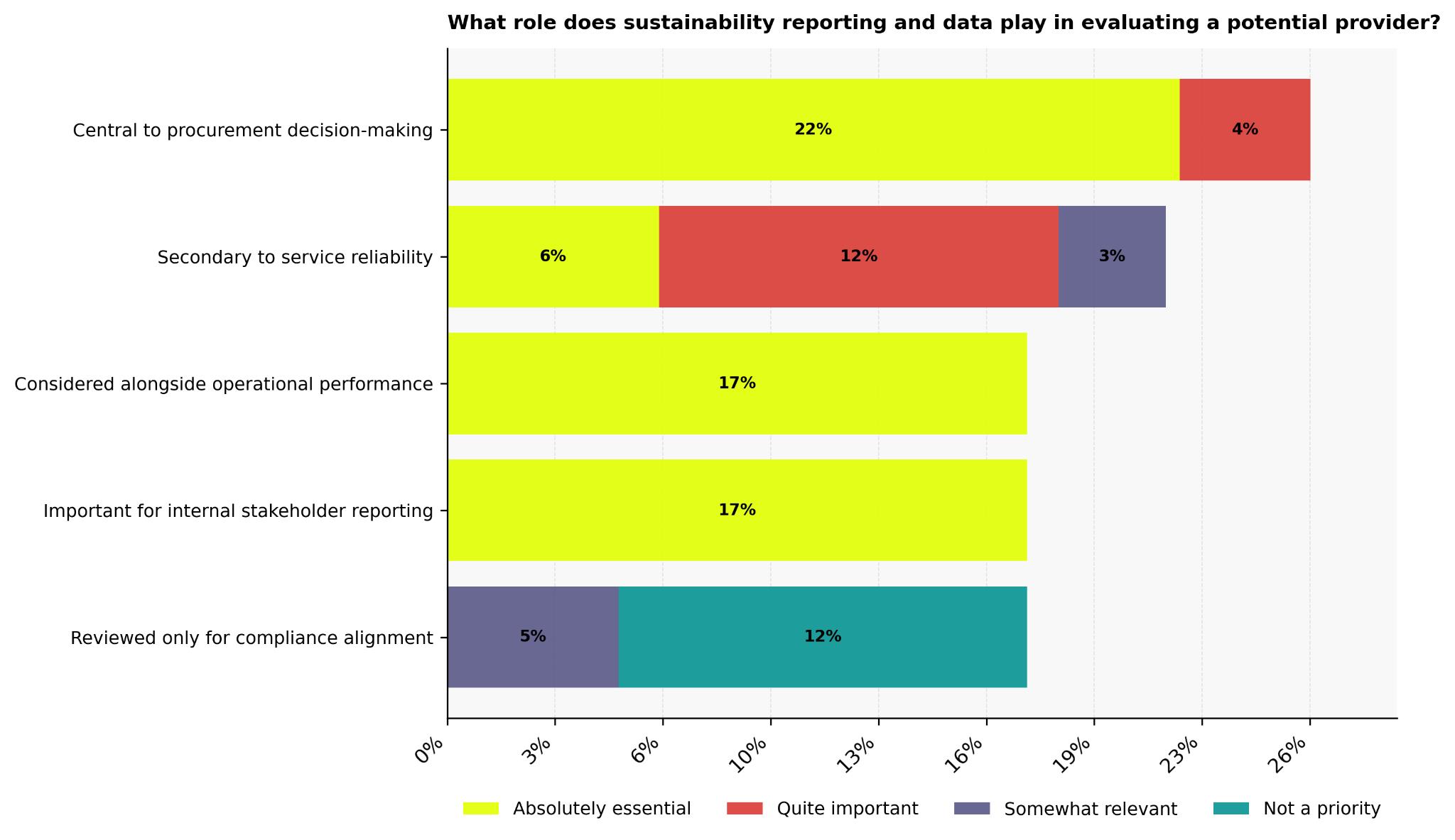
The role sustainability reporting and data play in evaluating a potential provider varies sharply among business leaders. For 26% of our audience, it sits at the centre of procurement decisions, with 22% calling it absolutely essential and 4% quite important, often linked to investor scrutiny, regulatory exposure, and reputational risk.
This focus tracks with the fact that 75% of UK investors now consider ESG risks and opportunities when screening investment opportunities, placing direct pressure on organisations to demonstrate credible environmental reporting.
Another group treats sustainability as secondary to service reliability, with 6% viewing it as essential, 12% as quite important, and 3% as somewhat relevant. These buyers tend to prioritise uninterrupted collections and operational stability first, using sustainability data as supporting material rather than a primary filter.
For 17%, sustainability is assessed alongside operational performance, showing a more integrated evaluation approach where environmental metrics sit beside cost, uptime, and service quality. A further 17% treat it as essential for internal stakeholder reporting, driven by board oversight, audit requirements, and rising transparency expectations.
At the other end, 5% review sustainability mainly for compliance alignment, and 12% do not treat it as a priority, pointing to organisations where reporting remains reactive rather than strategically embedded.
How Do You Assess Transparency From A Waste Management Provider Before Entering Into An Agreement?
98% of business leaders who use waste management services assess a provider’s transparency before entering an agreement by looking at their openness around pricing
Openness on costs is the primary gauge:
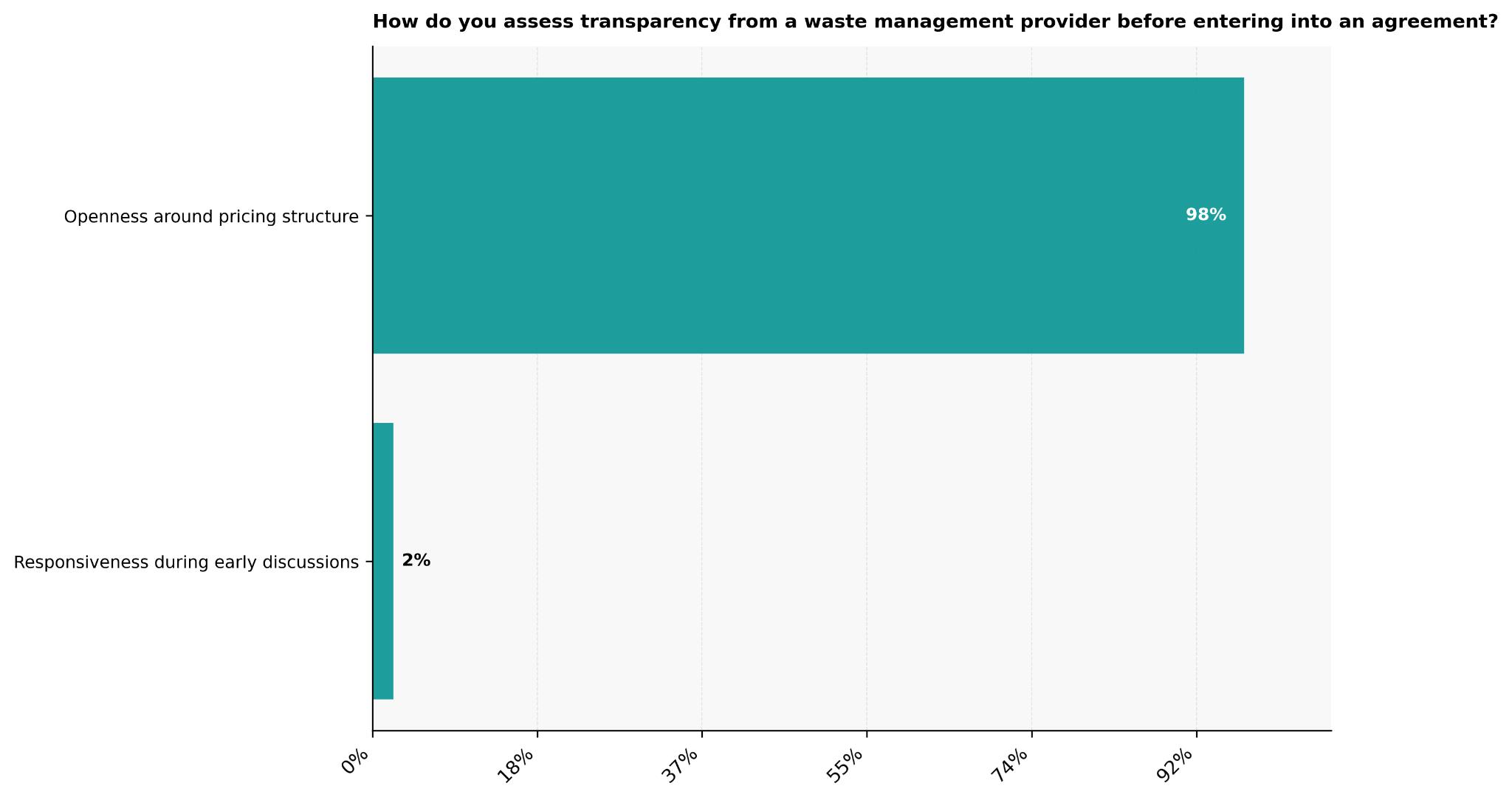
The vast majority of business leaders who use waste management services assess transparency from a waste management provider before entering into an agreement by examining openness around pricing structure.
A decisive 98% focus on how clearly costs are presented, including collection charges, disposal fees, reporting add-ons, and any variable elements that could affect long-term spend. This scrutiny matches warnings from the Competition and Markets Authority that incomplete pricing can make services appear cheaper than they are, distorting comparison and disadvantaging providers that compete fairly. New guidance linked to the Digital Markets, Competition and Consumer Act 2024 has further strengthened expectations around full cost disclosure.
By contrast, only 2% assess transparency primarily through responsiveness during early discussions, suggesting that speed of reply carries little weight without clear financial clarity from the outset.
How Would You Describe Your Experience With Onboarding Your Current Waste Management Provider?
81% of business leaders who use waste management services say that their experience with onboarding was a structured process with minor operational challenges
Most onboarding is smooth, with fine-tuning along the way:
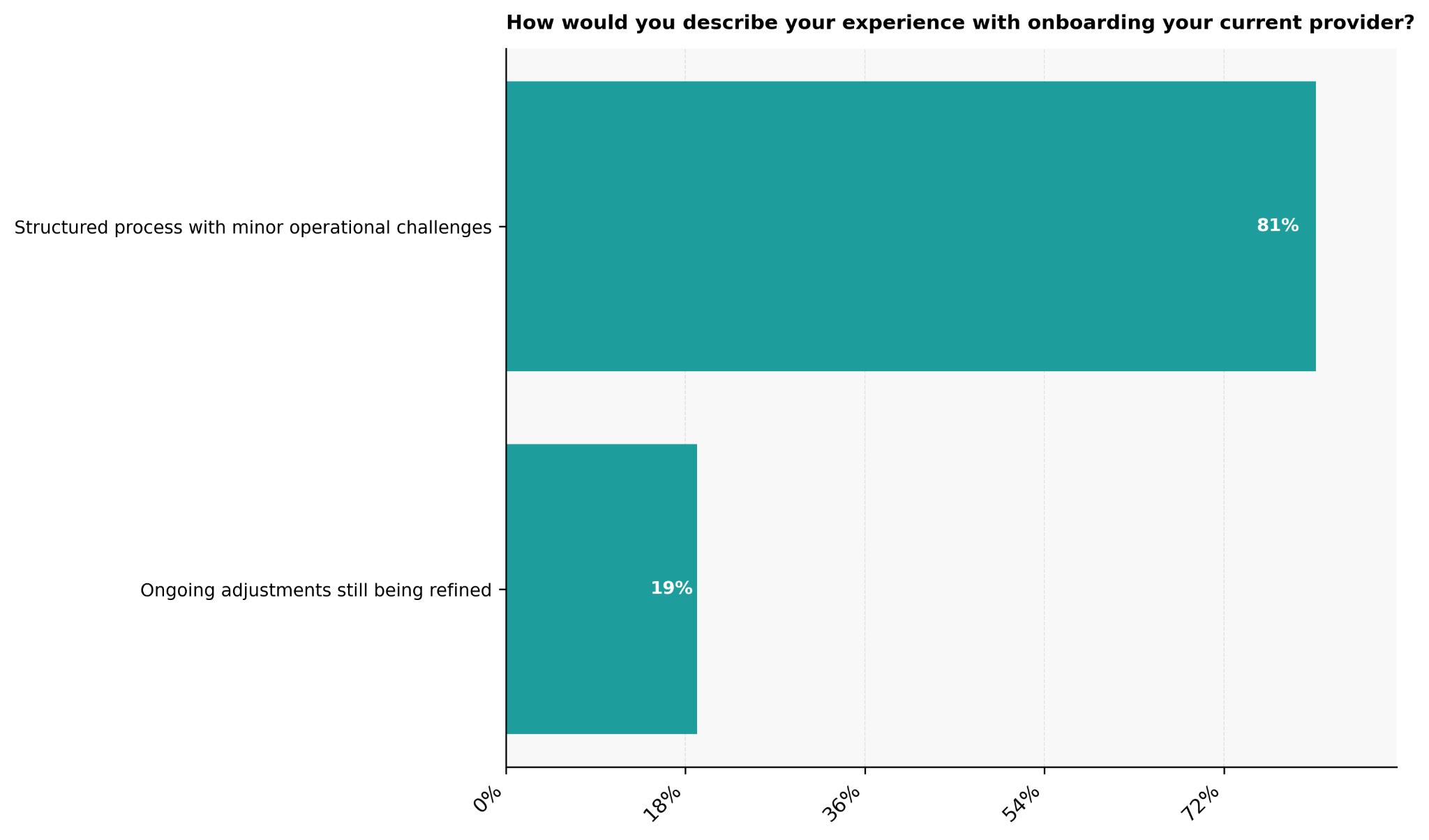
How business leaders who use waste management services describe their onboarding experience points to generally stable implementation. A clear 81% of our audience report a structured process with only minor operational challenges, suggesting that most providers manage system setup, scheduling, documentation, and handover in an organised and predictable way.
These early processes appear effective at getting collections, reporting, and communication channels running without major disruption.
The remaining 19% describe ongoing adjustments that are still being refined, probably linked to route optimisation, service frequency changes, or internal workflow alignment.
How Would You Assess Your Current Waste Management Provider’s Reliability In Meeting Collection And Service Commitments?
81% of business leaders say their current waste management services provider’s reliability in meeting their collection and service commitments is reliable, with occasional service issues
Most providers deliver reliably, with a few bumps along the way:
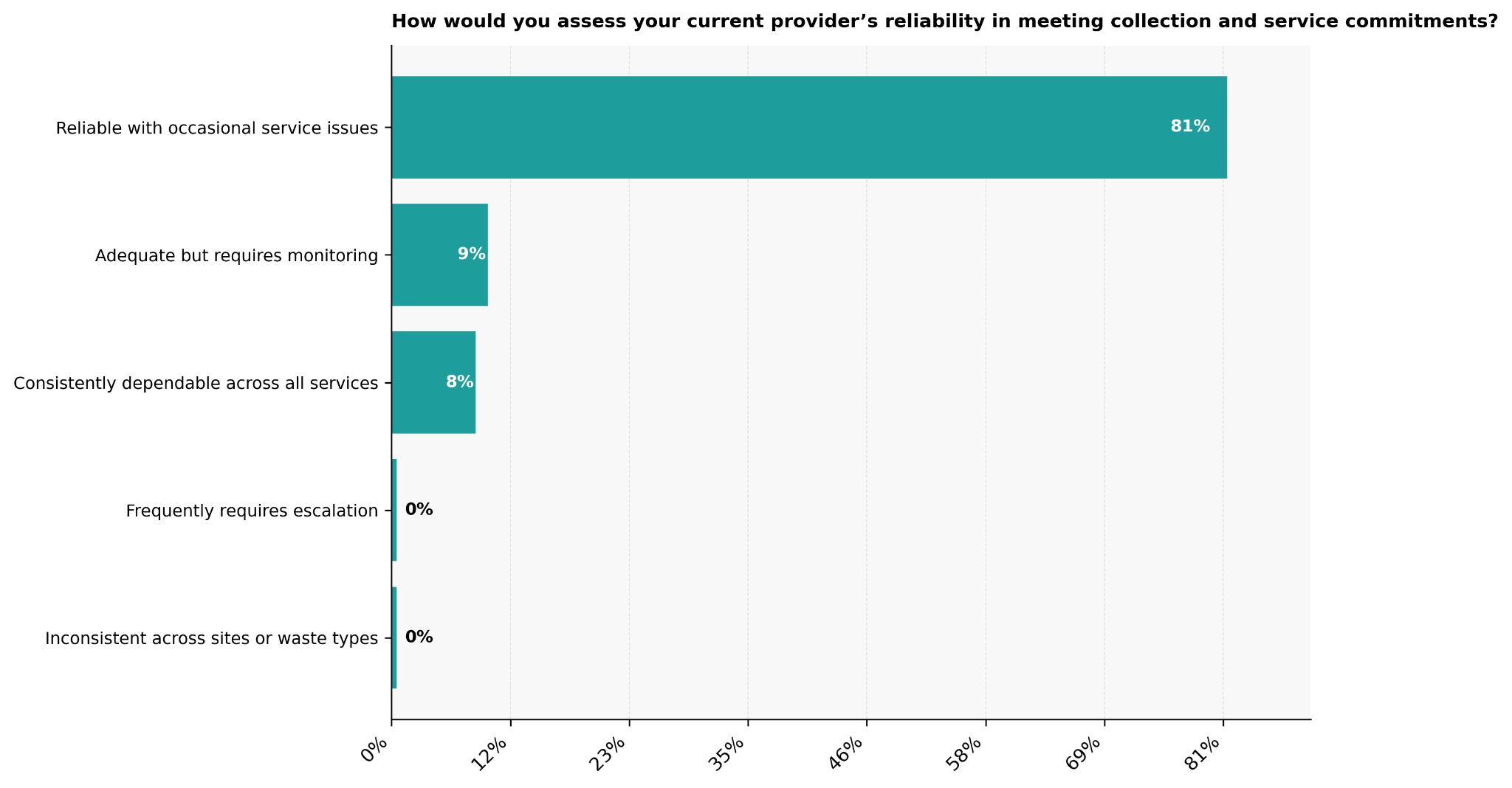
The way business leaders who use waste management services assess their provider’s reliability points to steady performance across most operations. A strong 81% describe their provider as reliable with occasional service issues, most likely linked to delayed collections, last-minute route changes, or short-term staffing gaps that are resolved without major disruption. For most organisations, these situations cause inconvenience rather than operational disruption.
Another 9% rate service as adequate but requiring monitoring, often because service levels can drift over time without regular check-ins. A further 8% report consistently dependable delivery across all services, pointing to providers with strong planning, scheduling, and communication systems.
Interestingly, no opinions were expressed involving frequent escalations or widespread inconsistencies, reinforcing the overall picture of stable, dependable performance.
How Effectively Does Your Current Waste Management Provider Support Your Sustainability Or Environmental Goals?
77% of business leaders who use waste management services say their current provider meets sustainability or environmental compliance requirements without added insights
Sustainability support runs from basic to proactive:
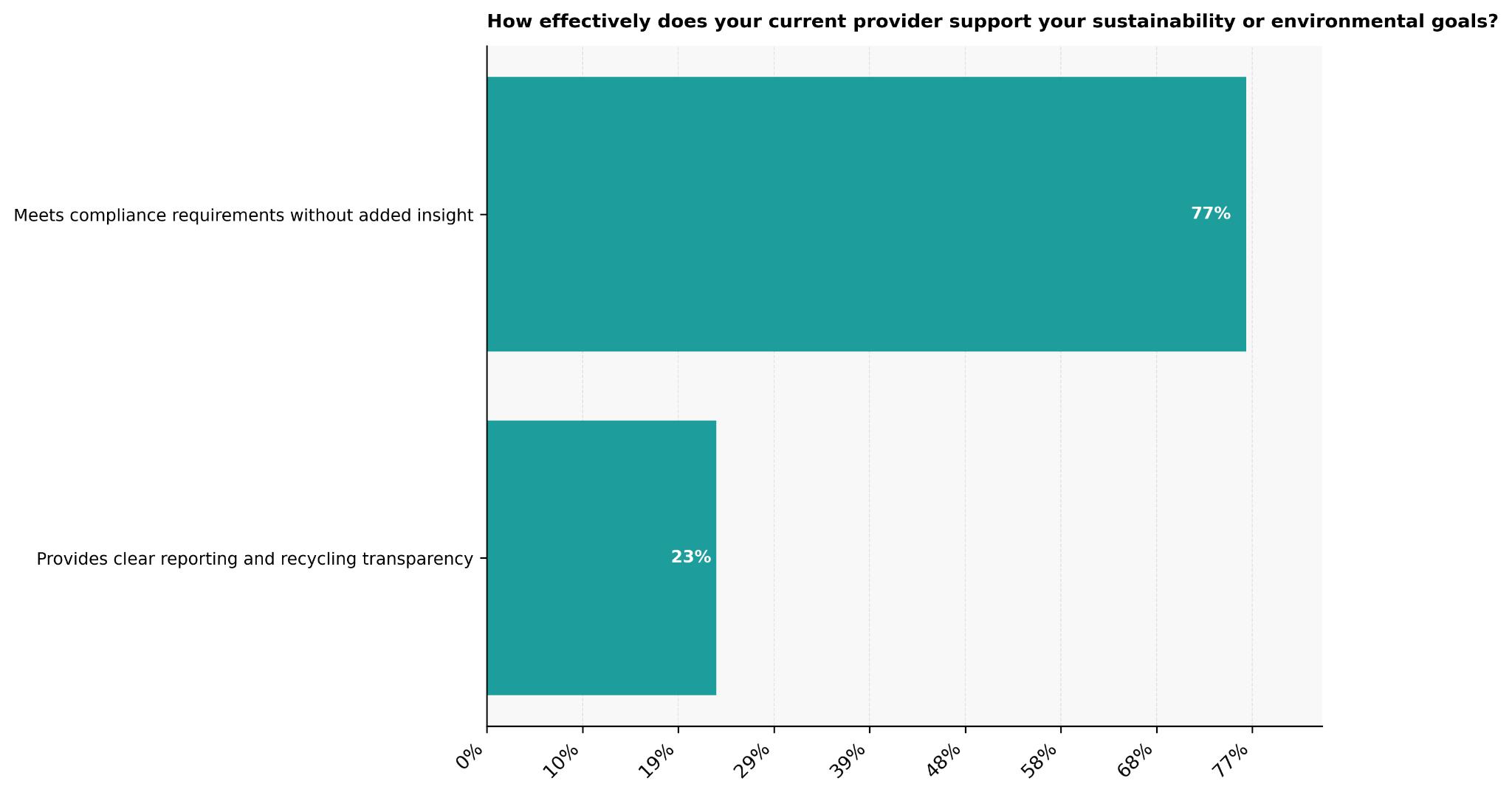
The effectiveness of current providers in supporting the sustainability or environmental goals of business leaders who use waste management services falls into two clear camps. For 77%, providers meet compliance requirements but offer little additional insight.
This usually means basic documentation and standard reporting, enough to satisfy regulatory expectations without helping organisations understand their wider environmental impact. That approach remains common even as national policy increasingly links waste performance to long-term carbon budgets and growth delivery plans.
The remaining 23% receive clear reporting and recycling transparency, giving them practical data for internal reviews and stakeholder discussions. This added value is becoming more significant in light of the UK Methane Action Plan, which identifies the waste sector as responsible for 31% of national methane emissions. For this group, transparent reporting supports more active environmental management rather than compliance alone.
What Has Most Shaped Your Overall Satisfaction With Your Current Waste Management Provider?
49% of business leaders say that service reliability and consistency have most shaped their overall satisfaction with their current waste management services
How providers respond matters more than what they charge:
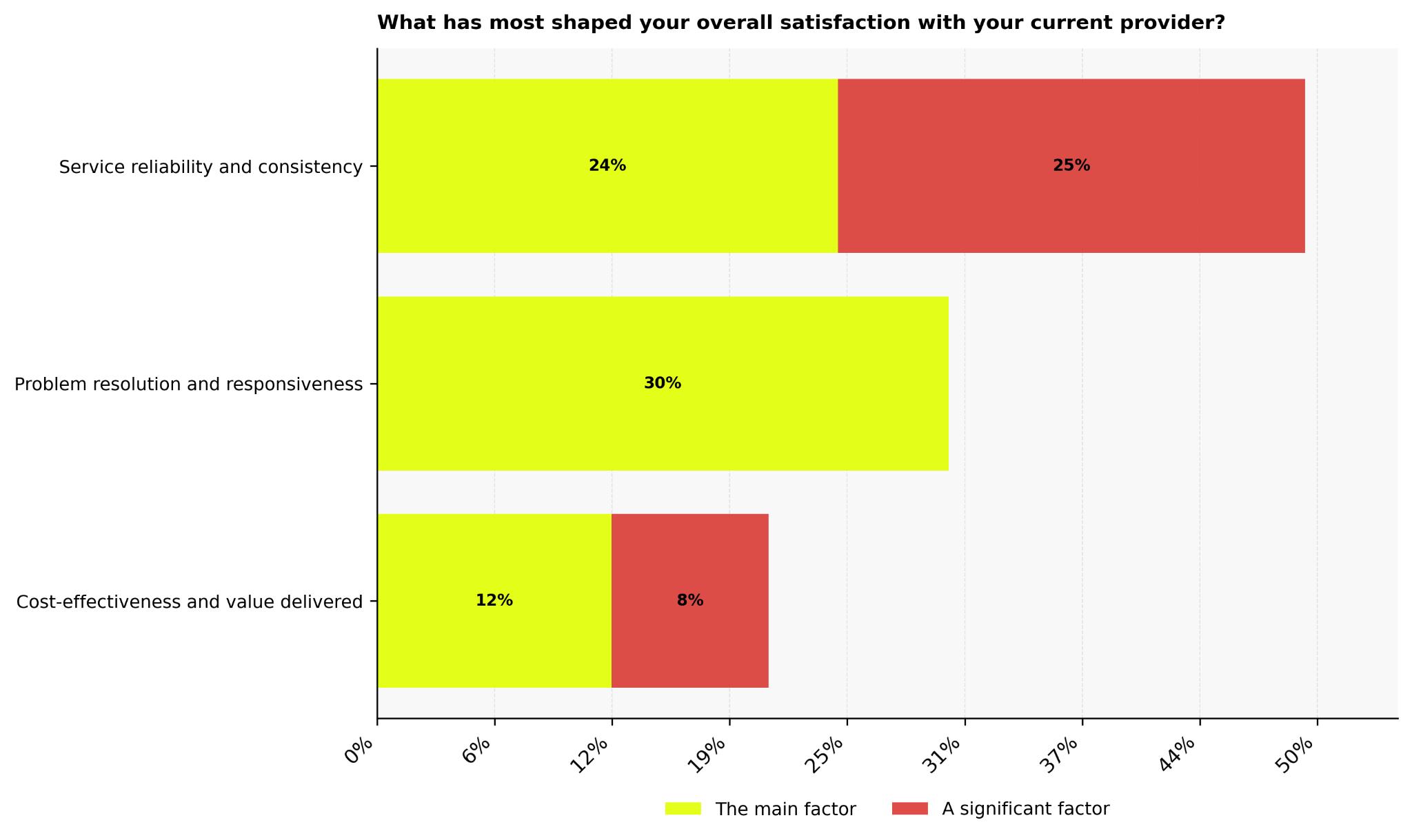
What shapes overall satisfaction with a current provider for business leaders who use waste management services is driven mainly by how well issues are handled and how reliably services are delivered. Problem resolution and responsiveness lead as the main factor for 30%, showing that fast, practical responses to missed collections, billing queries, or scheduling problems leave a lasting impression.
Service reliability and consistency follow closely, with 24% rating it as the main factor and a further 25% viewing it as a significant influence. This highlights the value placed on predictable collections, clear communication, and minimal disruption. Cost-effectiveness also plays a role, with 12% treating value delivered as the main driver and 8% as a significant factor, suggesting that price matters most when it aligns with dependable service and responsive support.
What Differentiates A High-Performing Waste Management Provider From Competitors In Your Experience?
Flexible service adaption is absolutely essential in differentiating between waste management provider and competitors for 50% of business leaders
Adaptability is what separates leaders from the rest:
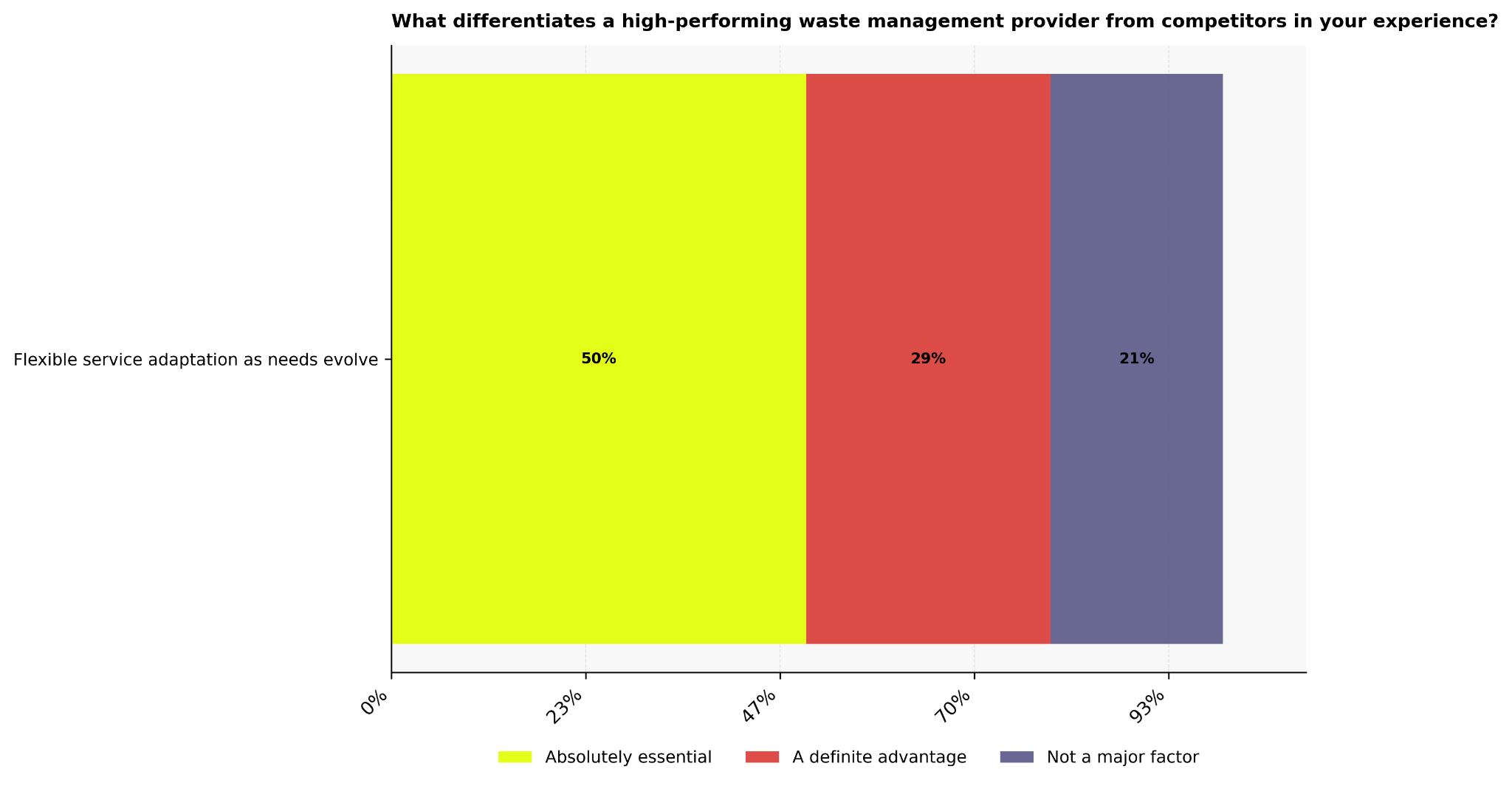
What differentiates a high-performing waste management provider from competitors centres strongly on flexible adaptation to evolving needs. 50% of our audience of business leaders who use waste management services see this as absolutely essential, with a further 29% considering it a definite advantage.
This emphasis tracks with industry analysis suggesting the UK waste sector has reached an inflection point, driven by tightening regulation, rising customer expectations, and accelerating digital innovation. In this environment, providers that can adjust routes, reporting, technology, and recovery solutions over time are increasingly viewed as long-term partners rather than transactional suppliers.
For the remaining 21%, flexibility is not a major factor, usually because their operations are relatively stable, with predictable waste volumes and established processes that continue to work without frequent adjustment.
When Reviewing Alternative Waste Management Providers, What Would Most Motivate You To Switch?
53% of business leaders who use waste management services agree that improved sustainability outcomes would motivate them to switch providers
Real improvements are what trigger provider changes:
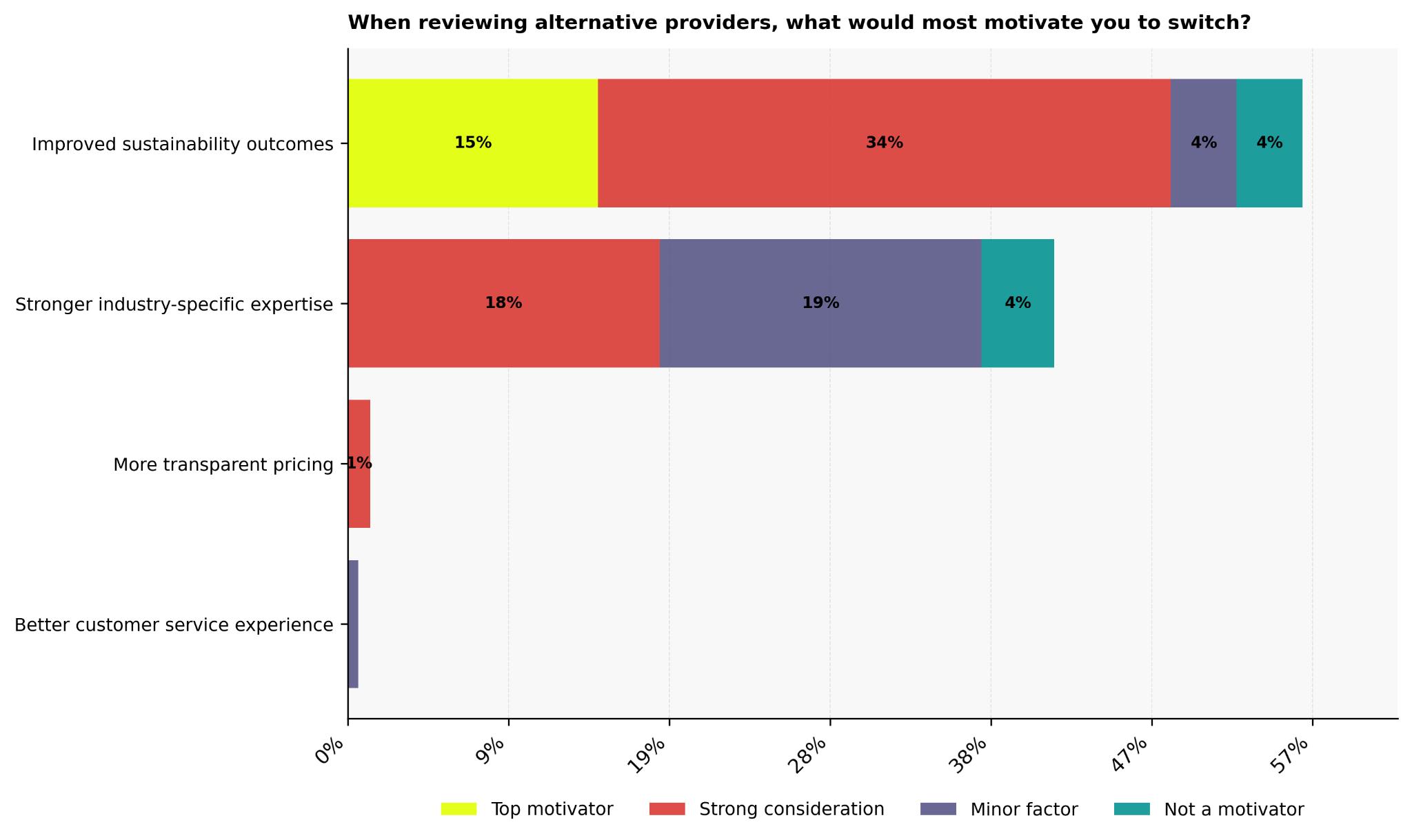
When reviewing alternate providers, what most motivates business leaders to consider switching waste management providers comes down to outcomes they can see and measure.
Improved sustainability outcomes lead the way, with 15% calling it a top motivator and 34% treating it as a strong consideration, alongside 4% viewing it as a minor factor and 4% saying it is not a motivator. This focus makes commercial sense, given that improved sustainability can cut operating costs by up to 60% and support brand reputation at a time when 85% of consumers adopt sustainable lifestyles.
Stronger industry-specific expertise also carries real pull, with 18% treating it as a strong consideration, 19% as a minor factor, and only 4% saying it is not a motivator, suggesting many buyers see specialist know-how as a worthwhile upgrade when service needs become more complex.
More transparent pricing lands at 1% as a strong consideration, which points to cost clarity being expected upfront. Better customer service sits below 1% as a minor factor, showing that service alone rarely prompts a switch without bigger operational gains.
Which City Is Your Organisation Based In?
86% of business leaders who use waste management services organisations are based in London
Operations cluster where waste volumes are highest:
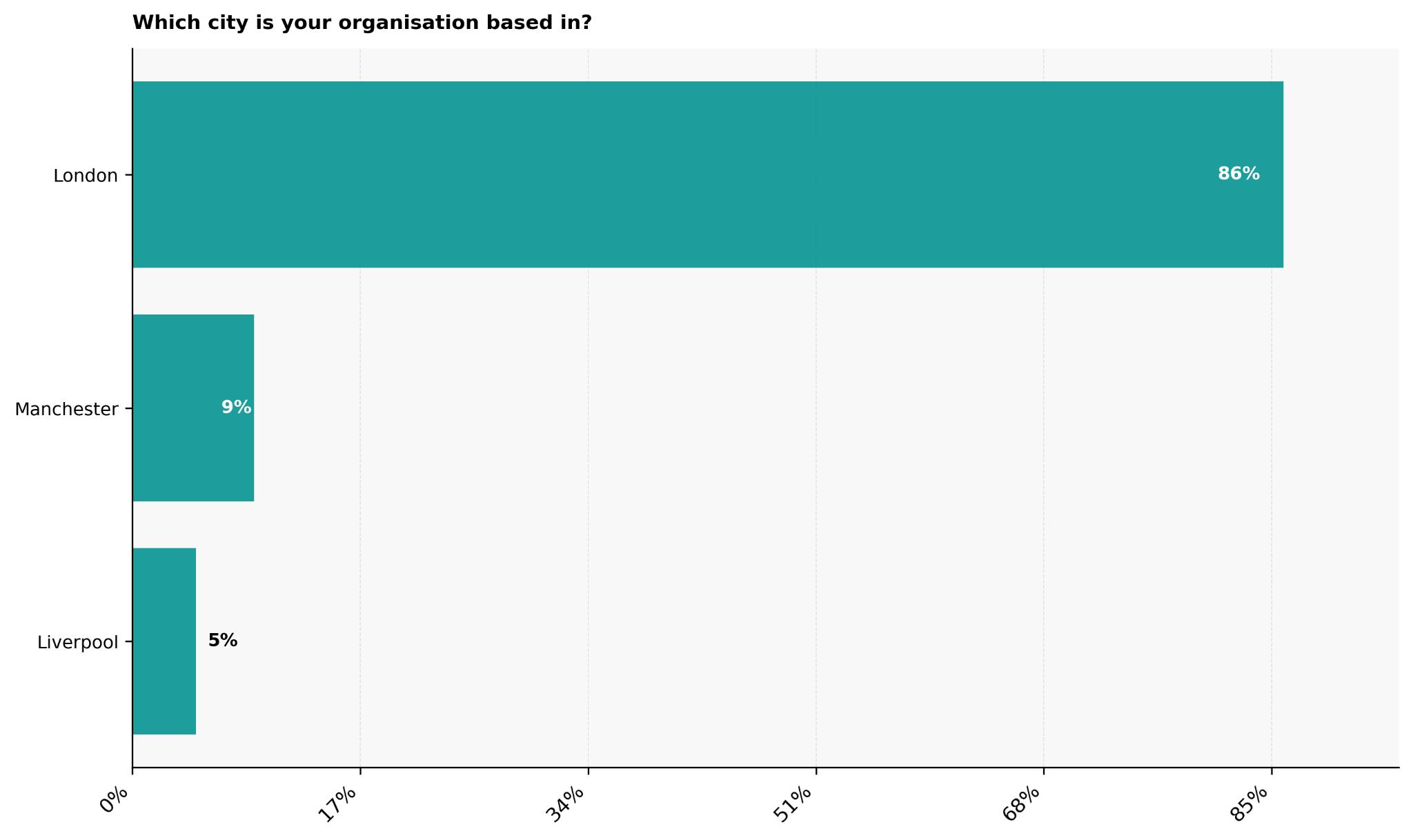
London features most prominently among the base cities for the organisations of business leaders in our audience, with 86% operating from the capital. This concentration is closely linked to scale.
London is estimated to generate around 7 million tonnes of waste annually from homes, businesses, and public buildings, creating constant demand for high-capacity, tightly coordinated waste services.
Manchester accounts for 9% and Liverpool for 5%, both of which make sense as large regional hubs.
Manchester’s mix of manufacturing, warehousing, construction, and commercial activity generates consistent business waste streams, while Liverpool’s port, logistics, and distribution footprint generates heavy volumes of packaging and transport-linked waste, alongside wider commercial waste from the city’s economy.
Reliability And Flexibility Matter More Than Ever In Waste Management
These findings show that choosing a waste management partner has evolved beyond basic service delivery, with reliability, adaptability, transparency, and environmental performance now shaping long-term value.
As operational and regulatory pressures continue to grow, businesses that select providers with the right capabilities are better positioned to manage risk, control costs, and support sustainable growth.
About The Data
Sourced using Push from an independent sample of 83,041 opinions of business leaders that use waste management services in the UK across X, Quora, Reddit, Bluesky, TikTok, and Threads. Responses are collected within a 95% confidence interval and 5% margin of error. Results are derived from what people describe online, from opinions expressed, not actual questions answered by people in the sample.
Want to learn more about sustainable business practices?
Visit BetterWaste.co.uk and find out how we can help your business reduce waste year-round!

James Allgood writes on UK commercial waste regulation, recycling compliance, and sustainability for businesses. At Better Waste Solutions, his focus is practical, helping business owners and operations teams understand what waste legislation requires of them and how to meet those requirements without unnecessary cost or complexity.
He covers topics including Simpler Recycling, food waste segregation, duty of care, and sector-specific guidance for hospitality, retail, healthcare, and office environments across England, Scotland, Wales, and Northern Ireland.
Get a quote for your business today!
 Operating across the whole of the UK
- Supplier placement flexibility
- No hidden fees
- 5 star Feefo service
Operating across the whole of the UKSupplier placement flexibilityNo hidden fees5 star Feefo service